
Shorea gratissima
Shorea gratissima
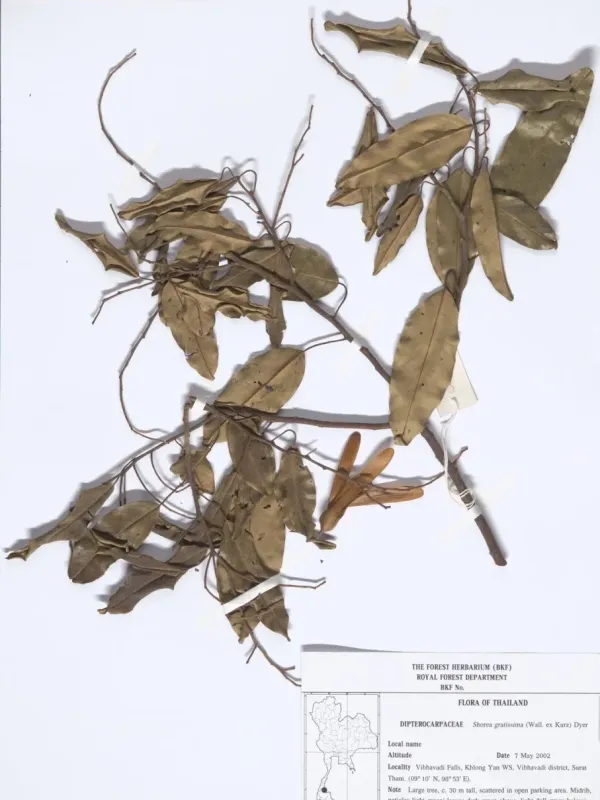
Description
Growing requirements
Shorea gratissima is a prominent species within the Dipterocarpaceae family, naturally occurring in the lowland tropical rainforests of Southeast Asia.
The plant thrives in equatorial climate zones characterized by high year-round temperatures and consistent, abundant annual rainfall patterns.
It prefers deep, fertile, and well-drained soils, typically found in alluvial plains and lower mountain slopes where nutrient accumulation is significant.
As a shade-tolerant species during its juvenile stage, it requires an established canopy to protect it from excessive solar radiation and to maintain a humid microclimate.
Successful cultivation necessitates mimicking natural forest conditions, focusing on soil moisture retention and the protection of delicate root systems during the early years.
Yield
The primary economic value of Shorea gratissima is derived from its high-quality timber, which is valued for its mechanical strength and structural durability.
The wood is frequently utilized in the construction industry, flooring, and high-end cabinetry, contributing significantly to the regional timber market.
In addition to industrial logging, the species plays a vital role in forest ecosystem services, including carbon sequestration and maintaining habitat integrity.
Local communities occasionally utilize the seeds and resin of various Shorea species for medicinal purposes or as traditional sources of vegetable fats.
Long-term forestry management is essential for this culture, given the extended time required for the trees to reach commercially viable harvest size.
Main diseases and pests
Fungal diseases, especially those affecting the root system, represent a severe threat when the plant is grown in unsuitable, poorly drained soil conditions.
Various insect pests, including stem borers and leaf-eating beetles, can cause significant damage, particularly in nursery settings or monoculture plantations.
Deforestation and land conversion remain the most critical threats to the species' existence, leading to habitat fragmentation and loss of genetic diversity.
Climate instability, particularly erratic precipitation patterns, interferes with the natural reproductive cycles and sapling survival rates in the wild.
Pathogen outbreaks in monoculture environments can spread rapidly, requiring rigorous phytosanitary measures to protect vulnerable forest stands.