
Shorea dyeri
Shorea dyeri
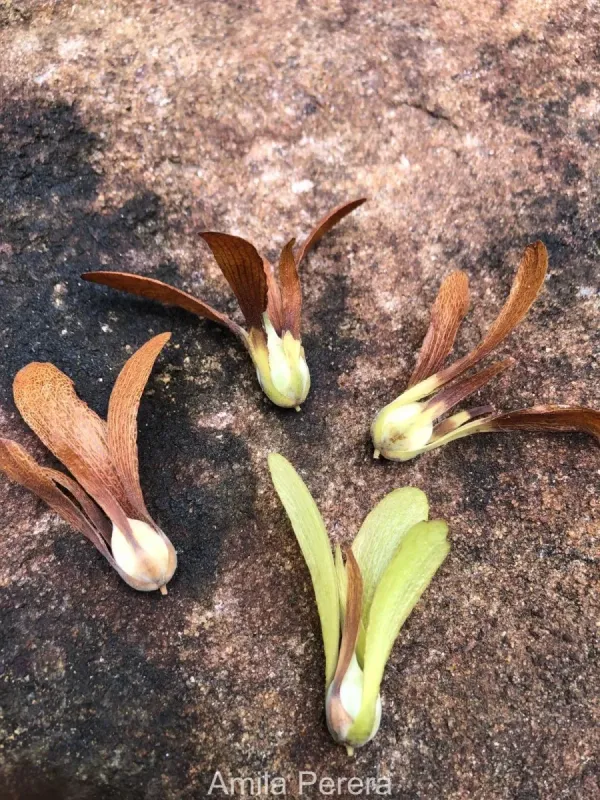
Description
Growing requirements
Shorea dyeri belongs to the family Dipterocarpaceae and is native to the tropical rainforests of Southeast Asia, specifically found in Borneo and the Malay Peninsula. It is a large, evergreen tree that serves as a key structural component in primary dipterocarp forests.
The species requires a humid tropical climate with abundant annual rainfall and consistent temperatures, typically ranging between 24 and 30 degrees Celsius. It does not tolerate prolonged dry spells, making its survival dependent on stable microclimatic conditions.
Botanically, it features a tall, straight bole and pronounced buttress roots which provide stability in soft, nutrient-rich forest soils. The species thrives best on deep, well-drained alluvial soils that allow for extensive root system development.
In terms of silviculture, Shorea dyeri is categorized as a climax forest species. Growth rates are generally moderate to slow, and seedlings require specific light conditions, often transitioning from shade tolerance in early years to high light requirements as mature trees.
Due to habitat loss and historical over-exploitation, the species is now subject to strict conservation efforts. Modern silvicultural practices focus on enrichment planting and protective management within natural forest reserves to ensure the species' long-term survival.
Harvesting
The primary commercial value of Shorea dyeri lies in its high-quality timber, which is classified under the trade name 'dark red meranti'. This wood is highly prized for its structural integrity, attractive grain, and relative resistance to weathering.
The timber is extensively used in high-end joinery, cabinet making, and interior finishing. Its excellent machining properties allow it to be easily sanded, stained, and polished, making it a favorite among professional furniture manufacturers.
Harvesting practices are heavily regulated to comply with international forestry standards. Sustainable extraction requires selective cutting methods that prioritize the health of the remaining forest stand rather than large-scale clear-cutting techniques.
Following extraction, the wood must undergo controlled kiln-drying processes. Proper drying is essential to reduce moisture content and eliminate internal stresses, ensuring that the final wood products remain stable and free from structural defects over time.
While the timber is the main product, researchers continue to study the tree's ecological role. Beyond its commercial utility, Shorea dyeri is crucial for carbon sequestration and maintaining the biodiversity of the fragile tropical ecosystems it inhabits.