
Shorea bracteolata
Shorea bracteolata
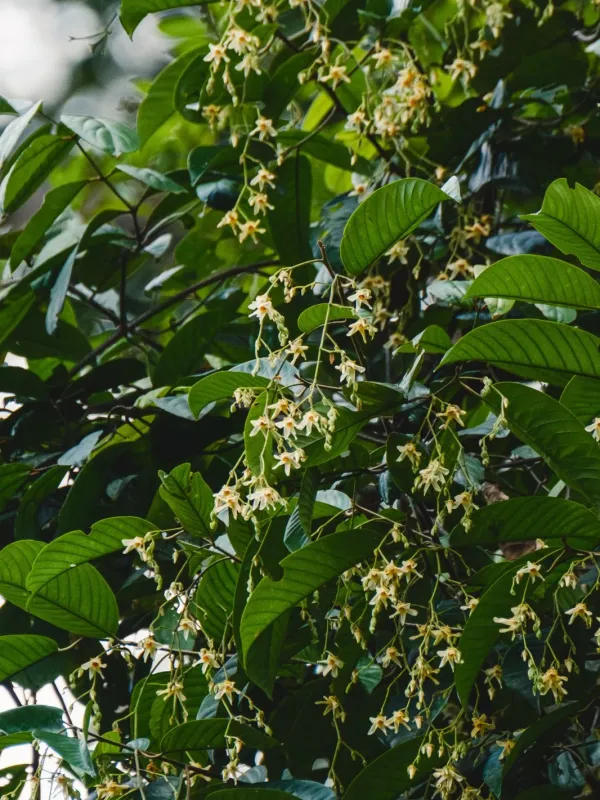
Description
Growing requirements
Shorea bracteolata is a prominent, large-sized evergreen tree species belonging to the Dipterocarpaceae family. It is native to the lowland dipterocarp forests of Southeast Asia, thriving particularly in countries like Malaysia, Indonesia, and Brunei.
This species requires a warm and humid tropical climate, with consistent rainfall patterns throughout the year. It generally prefers alluvial soils and well-drained low-lying terrain, where it can reach a total height of up to 60 meters.
Botanically, it features a distinct straight, cylindrical bole and a dense, high canopy. The leaves are typically evergreen, supporting the high photosynthetic capacity required for such a fast-growing, large-diameter tree species within the rainforest environment.
In silvicultural practices, the species propagation relies on seeds that are highly recalcitrant, meaning they lose viability quickly and must be sown immediately after collection in shaded nursery environments.
The tree plays a vital role in forest structure, offering complex habitats for various arboreal animals and serving as a key component for carbon sequestration in tropical ecosystems.
Yield
Shorea bracteolata is commercially recognized as one of the species that yields timber classified under the trade name «white meranti». This wood is highly valued in the industry for its moderate density, workability, and durability.
The timber is extensively used for light construction, high-quality plywood production, cabinetry, and interior finishing. Its excellent finishing properties make it a preferred choice for furniture manufacturing.
Yield management in forestry requires long-term rotation cycles, often spanning several decades. Sustainable harvesting methods are essential to maintain the ecological integrity of the forests while extracting valuable timber resources.
Economic profitability is tied to the growth rate and the quality of the harvested logs. Silvicultural interventions, such as selective thinning and competition control, are applied to promote better log development.
Beyond the timber, the tree is culturally and ecologically significant. The resin produced by various Shorea species has historically provided minor non-timber forest products, though industrial focus remains strictly on high-quality lumber output.
Main diseases and pests
The primary threats to Shorea bracteolata include large-scale deforestation and forest fragmentation. These activities destroy the specific microclimatic conditions necessary for the saplings to survive and thrive.
Pest outbreaks, particularly seed-boring insects, can devastate natural regeneration cycles, leading to a significant reduction in the density of young cohorts within the forest structure.
Root rot caused by fungal pathogens can become problematic in areas with poor drainage or where human activity has disrupted the natural soil composition and nutrient cycling.
Climate change poses a severe risk, as increased frequencies of extreme dry spells place physiological stress on the trees, weakening their natural defense mechanisms against insect attacks and opportunistic diseases.
Effective management requires strict adherence to biodiversity conservation protocols and rigorous monitoring to prevent the spread of diseases within both natural populations and silvicultural plantation areas.