
Monotes engleri
Monotes engleri
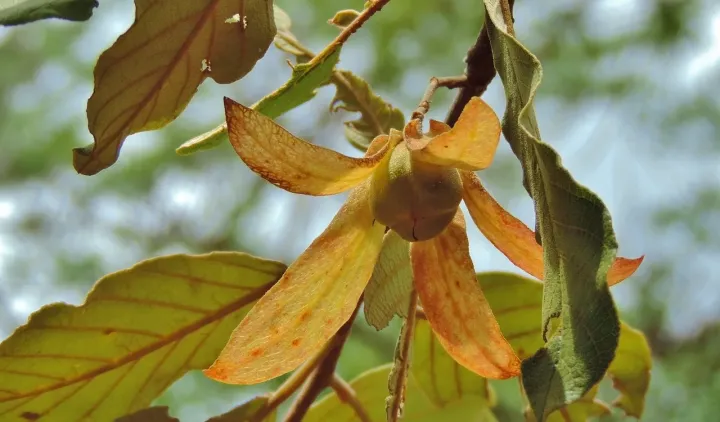
Description
Growing requirements
Monotes engleri is a tree species belonging to the family Dipterocarpaceae. Native to the tropical regions of Africa, this species is commonly found in the miombo woodland ecoregions, where it plays a significant role in maintaining local ecosystem stability and biodiversity.
Regarding environmental requirements, the species thrives in regions with distinct wet and dry seasons. It is highly drought-tolerant, making it a robust component of the landscape in arid and semi-arid zones where other more demanding plant species might struggle to survive.
The soil preferences for Monotes engleri lean towards well-drained, nutrient-poor, or sandy substrates. Successful growth depends on the soil profile's permeability, as the root system requires significant aeration, and prolonged waterlogging can prove detrimental to the tree's health.
Botanically, the tree exhibits specific characteristics such as leathery leaves and winged fruit structures, which aid in wind dispersal. Its growth rate is generally moderate, and it develops a sturdy trunk structure, which is a hallmark of the Dipterocarpaceae family members adapted to woody savannahs.
Economic and agricultural utility is primarily focused on non-timber forest products. Local communities utilize extracts from its bark and leaves for medicinal purposes, and the plant serves as a critical biological resource within the traditional agroforestry systems practiced in its native habitat.