
Hopea pentanervia
Hopea pentanervia
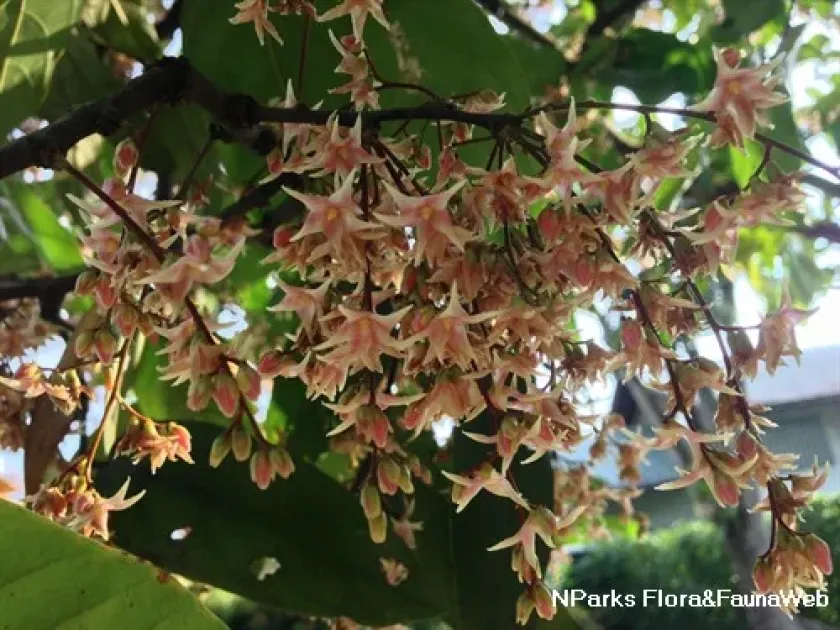
Description
Growing requirements
Hopea pentanervia is a prominent evergreen tree species belonging to the Dipterocarpaceae family. It is native to the tropical rainforests of Southeast Asia, where it thrives in the hot and humid conditions characteristic of the equatorial belt.
The plant has strict environmental requirements, including year-round high temperatures and a substantial, consistent rainfall pattern. It performs best in deep, fertile, and well-drained soils that support the development of a large root system.
Botanically, Hopea pentanervia is recognized by its distinctively veined leaves and its tendency to grow into a tall, straight-trunked tree. This physical trait makes it highly desirable for forestry, as it allows for the extraction of high-quality, straight timber logs.
Cultivation practices involve selecting sites that provide adequate shelter during the initial stages of growth. As the tree matures, it transitions into a canopy-dominant species, requiring significant light exposure to maintain its metabolic rate and wood density.
Economically, the species is highly valued for its dense and durable wood. It is commonly utilized in heavy construction projects, high-end furniture manufacturing, and flooring due to its natural resistance to environmental degradation and wood-boring insects.
Main diseases and pests
Habitat loss due to large-scale deforestation remains the primary threat to the natural populations of Hopea pentanervia. The fragmentation of tropical forests prevents natural seedling establishment and threatens the long-term viability of the species.
Pest outbreaks, particularly from bark beetles and wood-boring larvae, can significantly impact the quality of the timber. These pests tunnel into the trunk, compromising the structural integrity of the tree and creating entry points for fungal pathogens.
Fungal diseases, specifically root rot, are common in poorly drained forest sites where water accumulation occurs. These conditions inhibit root respiration and weaken the overall tree, making it susceptible to secondary environmental stresses.
Invasive plant competition in the understory can prevent young Hopea saplings from reaching the light they need to grow. Forestry management often requires periodic clearing of competing vegetation to ensure the survival of the desired crop.
Seed vulnerability represents a biological constraint for propagation, as the seeds have a short lifespan and are sensitive to desiccation. Immediate planting after harvesting is necessary to ensure successful germination and the establishment of new plantations.