
Hopea andersonii
Hopea andersonii
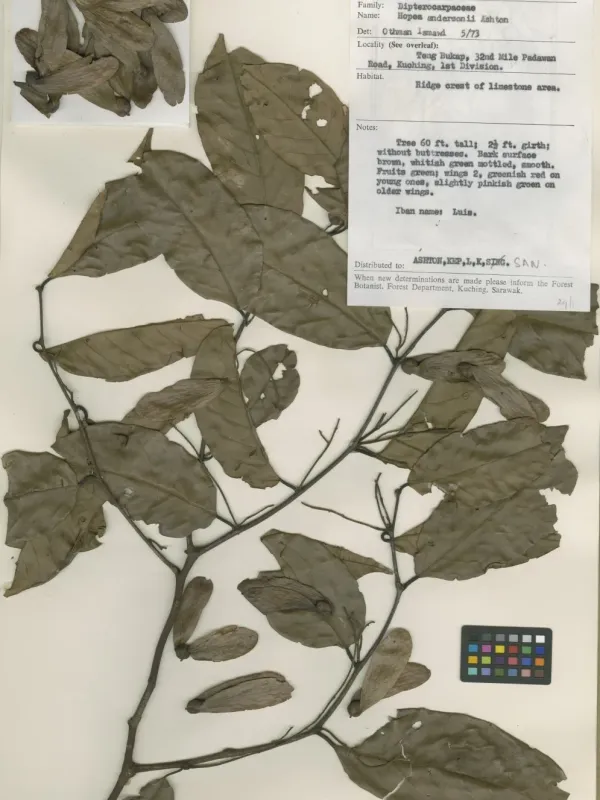
Description
Growing requirements
Hopea andersonii is a species of large tropical trees belonging to the Dipterocarpaceae family. This plant is endemic and thrives specifically within the conditions of the tropical rainforests of Southeast Asia.
For optimal growth, the crop requires consistently high air temperatures throughout the year without significant seasonal fluctuations. The ideal climate is characterized by high humidity and substantial rainfall, which is a critical factor for members of this family.
The plant prefers deep, organic-rich forest soils that provide excellent drainage despite heavy rainfall. It does not tolerate waterlogging of the root system, therefore, it selects elevated sites within its natural geographic range.
The biological features of the species include the development of a powerful, upright trunk capable of reaching significant heights. The foliage is evergreen and dense, adapted for efficient photosynthesis under the low-light conditions of the tropical forest understory.
Economic use of the species is primarily concentrated in the timber industry. The wood of Hopea andersonii is characterized by high density, strength, and resistance to decay, making it a valuable material for elite construction projects and furniture manufacturing.
Main diseases and pests
Major threats to this species are linked to human activity, including intensive deforestation of tropical rainforests. Changes in the microclimate in natural habitats negatively affect the ability of young trees to survive.
In the natural environment, pests include various wood-boring insects that damage the wood of older or weakened trees. Fungal pathogens are also observed, which trigger root rot development when soil drainage is compromised.
Foliage diseases caused by tropical fungi can affect young seedlings in nurseries if humidity is excessive and air circulation is poor. Prevention requires maintaining proper spacing when planting crops in forestry operations.
Competition from invasive plant species often suppresses the growth of young trees by depriving them of access to sufficient sunlight. This requires regular canopy thinning to ensure the survival of the crop.
A lack of effective population monitoring programs makes Hopea andersonii vulnerable to climate change. Sustainable management of forest resources is an essential condition for the conservation of this biological species.