
Dipterocarpus obtusifolius
Dipterocarpus obtusifolius
Description
Growing requirements
Dipterocarpus obtusifolius is a significant deciduous tree belonging to the Dipterocarpaceae family. It is typically found in Southeast Asia, developing into a majestic specimen with a thick trunk and a broad canopy, often reaching heights of 30 meters.
The species is primarily adapted to dry dipterocarp forest ecosystems. It thrives in regions with distinct wet and dry monsoon seasons, demonstrating remarkable tolerance to extreme moisture fluctuations throughout the year.
In terms of soil preference, this tree requires well-drained substrates. It frequently colonizes lateritic or sandy soils where other species might struggle. The roots are deep and robust, providing stability in open and often rocky landscape conditions.
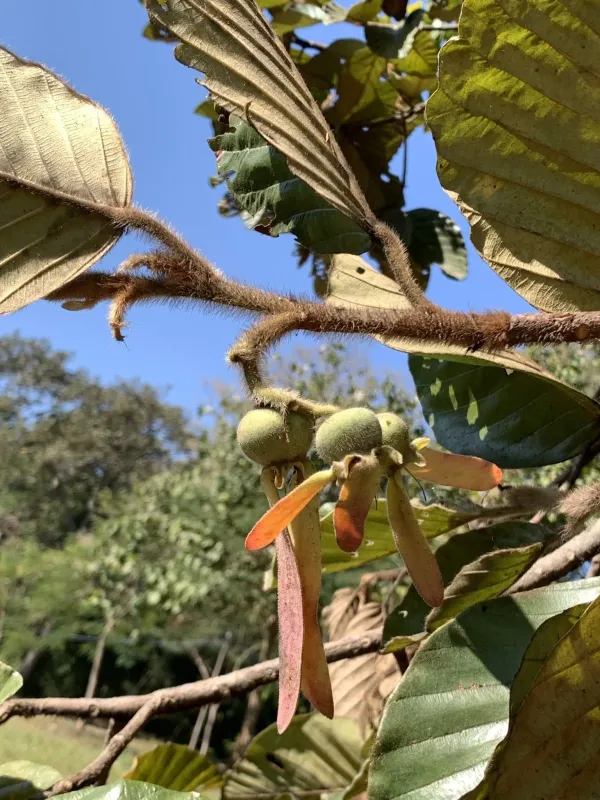
Botanically, the leaves are characteristic due to their obtuse shape and leathery texture. During the peak of the dry season, the tree sheds its foliage as a survival strategy to reduce transpiration and prevent water stress.
The reproduction cycle relies on wind-dispersed fruits. The unique winged seeds enable the tree to colonize new clearings efficiently, which is a critical trait for maintaining forest health in its native habitat.
Harvesting
The timber harvested from Dipterocarpus obtusifolius is highly valued for its physical strength and durability. It is extensively used in local construction, particularly for structural frames, beams, and high-quality flooring materials.
The wood's dense structure makes it resistant to wear and tear, which adds value for cabinet making and various carpentry tasks. It is considered a premium material in the regional timber market due to its structural integrity.
Beyond timber, the tree is a source of resin, which has been traditionally used by local communities. This oleoresin is collected by tapping the trunks and is utilized in waterproofing, local medicine, and as an ingredient in artisanal varnish production.
From an ecological perspective, this species serves as a vital component in preserving landscape stability. By mitigating soil erosion, these trees play an essential role in protecting watersheds within their native forest ranges.
Management of the species involves controlled harvesting practices to ensure sustainable regeneration. Given that seeds lose viability quickly, foresters focus on immediate nursery propagation to replenish areas affected by natural forest clearance.