
Lumnitzera littorea
Lumnitzera littorea
Description
Growing requirements
Lumnitzera littorea is a prominent member of the Combretaceae family, widely recognized as a key species of mangrove forests. It is native to the coastal regions of the Indo-Pacific, extending from Southeast Asia to the northern parts of Australia and various Pacific islands.
This species thrives in intertidal zones where it is regularly submerged by saline or brackish water. It requires a high level of moisture and is highly tolerant of saline environments, making it a critical component of coastal stabilization in its native tropical habitat.
The ideal growing medium for this culture is nutrient-rich, soft, and aerated mud or sandy-silt deposits. The soil must provide enough support for the root system while allowing for the exchange of gases, as the tree relies on specialized structures to survive in waterlogged, anaerobic conditions.
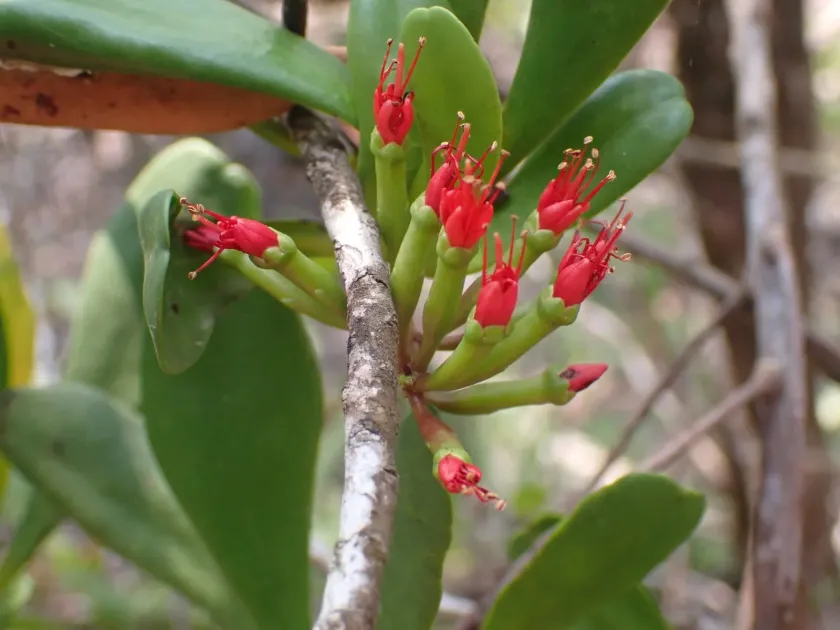
Botanically, Lumnitzera littorea grows as a sturdy shrub or tree, characterized by its smooth, grey bark and brilliant red flowers. The leaves are succulent and evergreen, providing an efficient way for the plant to conserve water and manage salt accumulation in tissues.
In terms of economic utility, the wood of Lumnitzera littorea is highly prized for its exceptional density and natural resistance to termites and rot. It is frequently harvested for heavy construction, such as poles, fence posts, and marine pilings, as well as for high-quality charcoal production.
Main diseases and pests
The primary threats to Lumnitzera littorea include the destruction of mangrove habitats for aquaculture development, particularly the expansion of shrimp farms. This activity significantly reduces the area available for healthy mangrove growth and disrupts coastal biodiversity.
Pests such as wood-boring beetles can cause severe damage to the tree trunks, particularly when the trees are weakened by environmental changes. Furthermore, fungal infections related to root diseases can occur if the natural tidal flow is obstructed or if the soil quality is degraded by pollutants.