
Guiera senegalensis
Guiera senegalensis
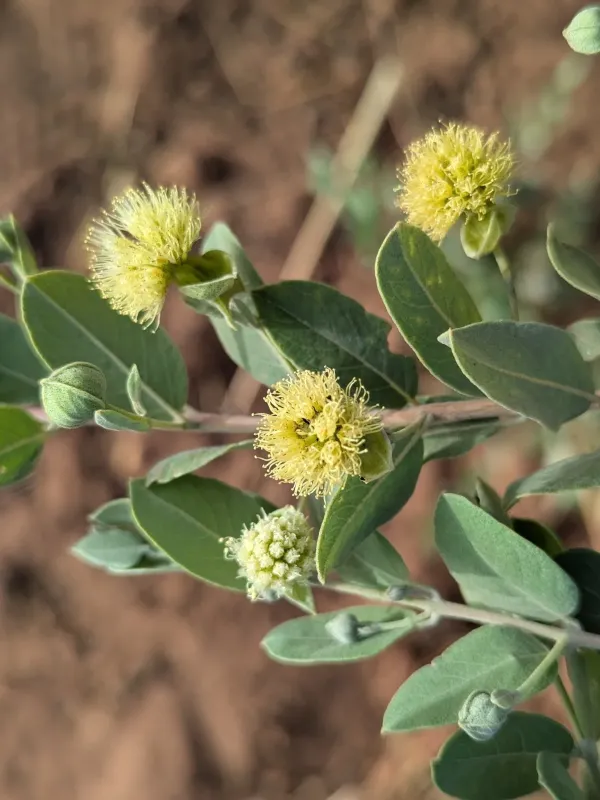
Description
Sowing dates
Guiera senegalensis propagation is primarily achieved through direct seeding or vegetative cuttings. Seeds are typically sown at the beginning of the rainy season to capitalize on the natural soil moisture necessary for germination.
To improve germination rates, seeds may require pre-treatment to break their dormancy. Mechanical scarification of the hard seed coat significantly increases the speed and uniformity of sprouting.
Nursery-grown seedlings are often transplanted into prepared soil patches once they reach a height of 20-30 cm. This method ensures better survival rates compared to direct field sowing in harsh environments.
Planting density is adjusted based on the intended use. For biomass or fodder production, closer spacing is used, while wider spacing is preferred if the focus is on the collection of leaves for medicinal extraction.
Proper field preparation, including the removal of competing perennial grasses, is essential during the establishment phase to ensure the young plants are not outcompeted for nutrients.
Growing requirements
This species is a resilient member of the Combretaceae family, native to the Sahel region of Africa. It is highly evolved to survive in arid and semi-arid climates with prolonged dry seasons.
Guiera senegalensis thrives in sandy or rocky soils with good drainage. It is notoriously tolerant of low-fertility soils and can grow effectively where other agricultural crops struggle to maintain growth.
The plant requires high levels of solar radiation and is extremely light-demanding. It performs best in areas with an annual rainfall range of 300 to 800 mm, showing remarkable drought resistance.
Temperature tolerance is a key feature of this crop, as it withstands extreme heat reaching up to 45°C. During the peak of the dry season, the plant minimizes water loss by shedding foliage, remaining dormant until rains return.
Soil pH ranging from slightly acidic to neutral is optimal. While it requires very little external fertilization, organic mulching around the base of young plants can significantly improve initial growth rates.
Yield
Yield estimation for Guiera senegalensis is primarily based on the production of dry leaf biomass. A mature, healthy shrub can produce several kilograms of high-quality foliage annually under favorable conditions.
Regular pruning cycles are a standard management practice that encourages vegetative regrowth. This approach allows for multiple harvests of leaves per year, effectively maximizing the land's utility.
Biomass productivity can be improved through systematic management of soil moisture and periodic clearing of weeds. In improved systems, yield increases of 20-40% have been observed compared to wild stands.
Besides leaf production, the wood serves as a valuable secondary product, frequently used in local construction or as high-quality fuel for charcoal production, adding to the crop's overall economic value.
Sustainability of the yield is maintained by respecting the plant's recovery periods after harvest. Over-harvesting can reduce the vigor of the root system, thus potentially lowering future leaf yields.
Main diseases and pests
While relatively robust, Guiera senegalensis faces threats from specialized leaf-feeding insects, especially during the peak growth phase. Integrated pest management using natural predators is usually sufficient to maintain control.
Fungal pathogens may emerge in areas with poor drainage and high humidity. Ensuring adequate spacing between plants to facilitate airflow is the most effective preventive measure against fungal outbreaks.
Overgrazing by livestock is a major threat to young plantations. Protecting fields with fencing or thorns is essential until the plants reach a size where they can withstand browsing pressure.
The plant possesses strong allelopathic properties, which naturally limit weed infestation around its base. This chemical defense also helps the plant resist some soil-borne pathogens, making it a relatively low-maintenance crop.
Climate change and prolonged extreme droughts remain the most significant challenges, though the species is better adapted than most agricultural crops in the region to deal with these stressors.
Harvesting
Harvesting is typically conducted by hand-cutting the leaves and tender stems at the end of the rainy season. This timing ensures that the concentration of medicinal alkaloids and secondary metabolites is at its highest.
The harvested material is spread out to dry in shaded, well-ventilated areas. Direct sunlight is avoided to prevent the degradation of heat-sensitive chemical compounds present in the leaves.
Once dried to a stable moisture content, the leaves are processed through grinding or milling, depending on the final market requirement. Proper storage in dry, moisture-proof conditions is necessary to maintain shelf life.
Wood harvesting is managed through selective thinning or coppicing. Coppicing allows the root system to remain intact, facilitating rapid regrowth of new stems for the next cycle of biomass production.
Strict quality control during the harvesting process—such as removing debris and soil—is critical for securing a better price in the medicinal ingredient market, where leaf purity is a primary metric.