
Stereospermum kunthianum
Stereospermum kunthianum
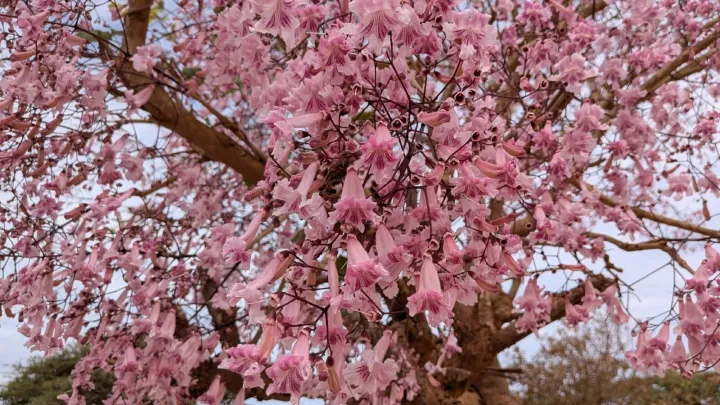
Description
Growing requirements
Stereospermum kunthianum is a deciduous tree belonging to the Bignoniaceae family. It is known for its showy, pink to purple bell-shaped flowers that appear before the new leaves emerge, creating a distinct visual impact in the savanna landscape.
Native to tropical Africa, this species thrives in savanna woodlands and bushlands. It is well-adapted to high-temperature environments with distinct seasonal cycles, exhibiting significant drought tolerance throughout its lifecycle.
For successful cultivation, the tree requires well-drained, porous soils. It is particularly sensitive to waterlogging, as the root system relies on high oxygen levels to remain healthy. Loam or sandy-loam soil profiles provide the best results for growth.
Exposure to full sunlight is essential for the maturation of the crown and prolific flowering. While the tree can tolerate poor soil quality, supplemental organic matter during the initial planting stages significantly boosts early development.
The cultural significance of this tree is deeply rooted in its medicinal properties. The bark and roots are extensively utilized in traditional medicine to address inflammatory conditions, acting as a valuable botanical resource for local populations.
Main diseases and pests
The primary biological threat to this species is the attack of wood-boring insects, which can create tunnels within the trunk and weaken the structural integrity of the tree. Integrated pest management strategies are necessary for older specimens.
Fungal pathogens represent a severe risk, especially during transition periods between dry and rainy seasons. Leaf blight can lead to premature defoliation if moisture levels are not managed effectively within nursery environments.
Inadequate soil drainage is a major abiotic threat. Over-watering creates an anaerobic environment that promotes the growth of soil-borne fungi, which can be fatal to the root system within a very short timeframe.
Weed encroachment is a common challenge for young saplings. Rapidly growing grasses and shrubs can compete for nutrients and light, necessitating consistent weeding cycles until the tree reaches a sufficient height.
Extreme climate variability, including uncharacteristic frost in subtropical regions or prolonged flooding, can inhibit the plant's natural dormancy mechanism, leading to physiological stress and potential loss of yield or growth potential.