
Catophractes alexandri
Catophractes alexandri
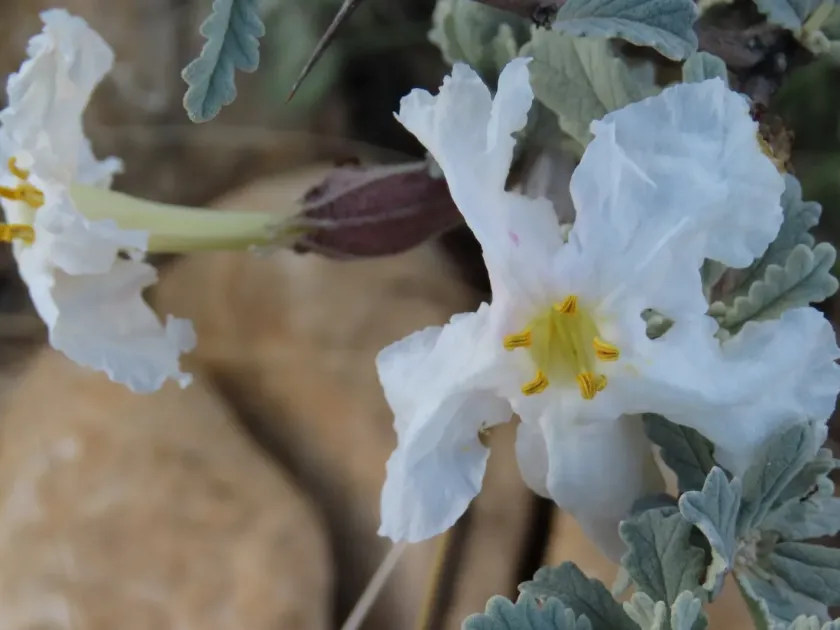
Description
Growing requirements
Catophractes alexandri is a specialized thorny shrub belonging to the Bignoniaceae family, native to the arid landscapes of southern Africa, particularly within the Kalahari region.
This species is highly specialized for survival in semi-desert environments. It possesses remarkable physiological adaptations that allow it to remain dormant during prolonged droughts while maintaining essential metabolic processes.
The plant thrives in nutrient-poor, well-drained sandy or rocky soils. It is particularly sensitive to soil compaction and waterlogging, which often inhibit the natural expansion of its extensive root system.
Optimal growth requires high solar irradiance. Catophractes alexandri is essentially a heliophilous species; it exhibits stunted growth if planted in shaded or partially shaded environments where competition for light is significant.
Botanically, it is known for its resilient, woody stems and long, rigid thorns. These structures serve both as a defense mechanism against browsers and as a physical barrier reducing moisture loss through transpiration.
Main diseases and pests
The primary threat to the health of Catophractes alexandri is fungal root rot. This condition is triggered almost exclusively by improper irrigation management or poor soil drainage in cultivation settings.
While the plant is naturally resistant to many common pests, certain desert-adapted borers can compromise the structural integrity of its main branches, making the plant susceptible to secondary infections.
Over-browsing by large herbivores in fragmented habitats is a significant threat, as the plant grows slowly and lacks the biomass regeneration capacity to recover from heavy damage quickly.
Environmental stress, such as unseasonable frosts or prolonged periods of high humidity, can disrupt the plant's delicate hormonal balance, leading to premature leaf drop or weakened immunity.
Effective management against threats focuses on mimicking natural arid conditions. Maintaining a dry root zone and ensuring adequate air circulation are the most critical factors for successful plant maintenance.