
Amentotaxus assamica
Amentotaxus assamica
Description
Growing requirements
Amentotaxus assamica is a rare, evergreen coniferous tree belonging to the Taxaceae family. It is naturally occurring in the humid subtropical forests of the Assam state in India and adjacent mountainous regions, where it thrives in shaded and moist environments.
The tree typically grows at altitudes ranging from 1500 to 2000 meters. Due to its specific environmental needs, it is highly sensitive to heat stress and fluctuations in atmospheric humidity, necessitating stable, controlled conditions when kept in botanical collections.
In terms of substrate, Amentotaxus assamica requires well-draining, humus-rich soil with a slightly acidic to neutral pH. Proper soil aeration is critical, as the species is highly susceptible to root rot if the roots are exposed to waterlogging for extended periods.
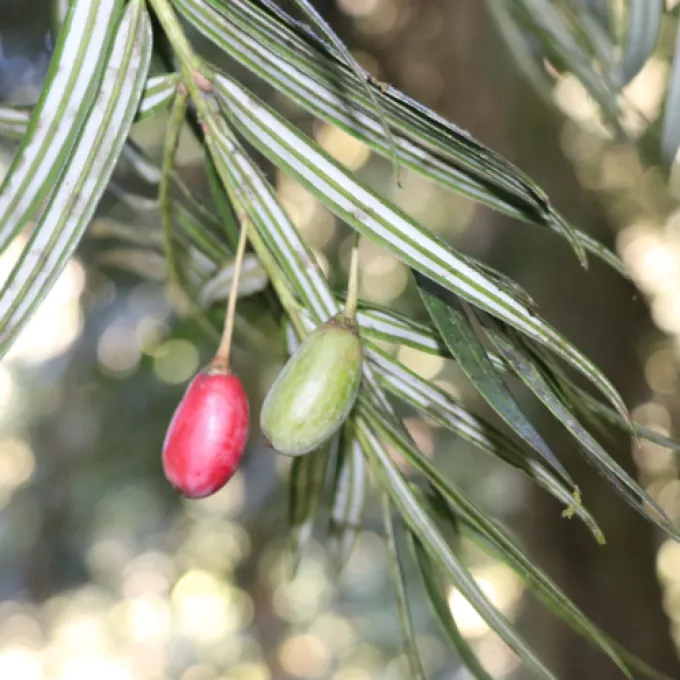
Botanically, it is characterized by its broad, lance-shaped, and sickle-like leaves, which grow up to 7 cm in length. These leaves feature two distinctive, pale, glaucous bands on the underside, which are characteristic markers for identifying the species within its genus.
Host-related use of this species is currently focused on conservation biology. Because it is classified as endangered, the cultivation is almost exclusively performed by research institutes and botanical gardens to ensure the survival of the genetic lineage through seed banking and cuttings.
Main diseases and pests
The primary threat to the wild populations of Amentotaxus assamica is habitat degradation caused by deforestation and climate shifts. The loss of the specific microclimates required by this species makes natural regeneration extremely difficult.
When grown in nurseries, the plant can be attacked by various fungal pathogens, specifically Phytophthora, which targets the root systems. Ensuring proper air circulation and strictly avoiding overwatering are the primary defenses against these destructive pathogens.
Insect pests, including scale insects (Coccidae) and spider mites, are common issues in greenhouse cultivation. These pests thrive in dry environments and can quickly weaken the plant by feeding on the sap of the needles and young shoots.
Management of these threats requires an integrated pest management approach. Frequent monitoring and manual cleaning of infested foliage are preferred over broad-spectrum chemical sprays, which may negatively impact the delicate growth of the tree.
Environmental stability, including the prevention of extreme temperature spikes, is essential for maintaining plant health. Stress caused by environmental factors often serves as a trigger for various opportunistic infections and mite infestations in this specific species.