
Adenocalymma bracteatum
Adenocalymma bracteatum
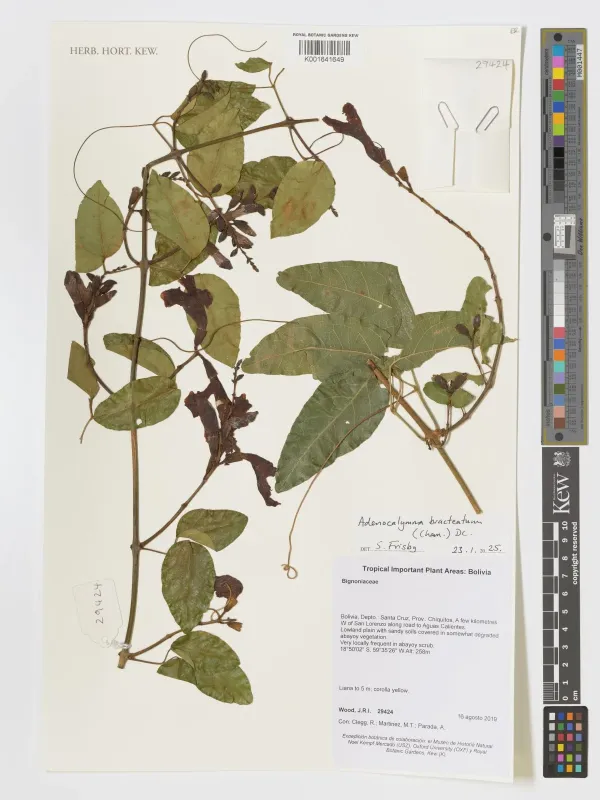
Description
Sowing dates
Adenocalymma bracteatum is a woody climbing vine belonging to the Bignoniaceae family, native to tropical environments. For propagation, stem cuttings are the most reliable method, providing stable growth rates and consistent development of the vine structure.
Seed sowing is conducted in a sandy, peat-based mix at temperatures exceeding 22°C. Seeds require superficial sowing due to their specific light requirements for germination, and they should be handled immediately after maturation to maintain high viability.
Transplanting seedlings to their final location requires warm soil and minimal risk of frost. The root ball should be handled with care to ensure the stability of the plant as it transitions to a new environment, requiring deep initial watering.
The spacing of these plants depends on their intended use, ranging from 1.5 to 3 meters for vertical trellis coverage. Proper spacing ensures adequate air circulation, which is essential to prevent the accumulation of moisture and pathogens within the canopy.
Support structures are mandatory for this species. Installing trellises or sturdy wire systems at the time of planting prevents damage to developing stems and ensures the vine can establish a strong, healthy vertical growth pattern early on.
Growing requirements
This species is well-adapted to tropical conditions, requiring consistently warm temperatures throughout its active growing season. It performs poorly in regions subject to frequent temperature drops, which can lead to significant physiological stress.
Well-drained, fertile soil is a primary necessity for Adenocalymma. It prefers substrates with a neutral pH, and any waterlogging in the root zone must be avoided to prevent root diseases and ensure consistent nutrient uptake for vigorous development.
Exposure to full sunlight is essential for the production of healthy, flowering vines. In low-light environments, the plant will produce elongated, weak stems and significantly reduced blossom yields, making site selection a critical factor for success.
Regular irrigation is vital, particularly during the hot season, to maintain leaf turgor and metabolic function. However, avoiding direct saturation of the blossoms will extend their lifespan and maintain the aesthetic value of the plant.
A balanced fertilizer regime, prioritizing phosphorus and potassium, should be implemented during the vegetative phase. This promotes strong stem development and encourages the initiation of prolific flowering, enhancing the ornamental value of the vine.
Main diseases and pests
Spider mites are a common pest in arid conditions, especially in greenhouse settings. They feed on leaf tissues, causing yellowing and drying; control involves increasing humidity levels and using appropriate acaricides when outbreaks occur.
Powdery mildew represents a significant fungal threat, usually triggered by stagnant air and high humidity. It is characterized by a white powdery coating on foliage, which can be mitigated by ensuring proper plant spacing and airflow.
Root rot is typically associated with poor drainage and excessive watering. If signs of wilting appear without water stress, the soil moisture must be evaluated, and fungicides may be necessary to save the root structure of the vine.
Aphids often target new shoot growth, causing stunted development and leaf distortion. Periodic inspections and the application of insecticidal soap are usually effective for managing minor infestations before they spread to larger sections of the plant.
Mealybugs can cluster on stems and leaf nodes, extracting sap and weakening the vine. Manual removal or the use of systemic insecticides during early spring can prevent these pests from establishing large, damaging populations throughout the season.