
Garlic Vine
Adenocalymma alliaceum
Description
Growing requirements
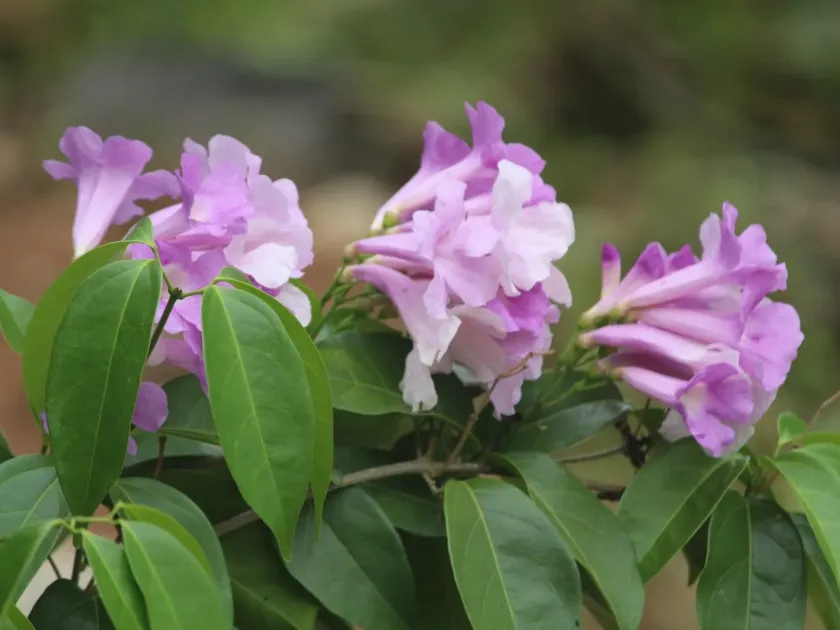
The Garlic Vine (Adenocalymma alliaceum), also commonly referred to by its synonym Mansoa alliacea, is a striking perennial woody climber belonging to the Bignoniaceae family. It is native to the tropical rainforests of Central and South America.
The plant is world-renowned for its distinct garlic-like aroma, which is released when the leaves or stems are crushed. This unique scent serves as a natural defense mechanism against herbivores and insects in the wild.
For successful cultivation, the Garlic Vine requires a frost-free environment with plenty of warmth and high humidity. It is typically grown in tropical regions outdoors or in greenhouses where the temperature remains stable throughout the year.
The plant prefers well-drained, fertile soil rich in organic matter. As a vigorous climber, it needs a sturdy trellis, fence, or arbor to support its long, woody vines which can reach significant lengths if not pruned regularly.
In addition to its decorative appeal, the plant is historically valued for its medicinal properties. The leaves and roots are often used in traditional remedies to treat respiratory ailments, fevers, and various inflammatory conditions.
Main diseases and pests
Spider mites are the most common pest, especially in indoor environments where the air is dry. They feed on the underside of the leaves, causing discoloration and eventual leaf drop.
Mealybugs may also infest the plant, settling in the leaf axils and stems. Regular inspection and gentle washing of the foliage can help manage minor infestations effectively.
Root rot is a significant threat caused by overwatering or poor drainage. Ensuring the pot or planting site has a proper drainage layer is essential to keep the root system healthy and productive.
Lack of sufficient sunlight can weaken the vine, making it more susceptible to fungal diseases. Ideally, the plant should be placed in a spot with bright, indirect light or full sun to maintain its vigor.
While the plant's strong odor repels many generalist pests, it is not immune to all threats. Integrated pest management, including monitoring and good cultural practices, is recommended for long-term health.