
Symplocos oblongifolia
Symplocos oblongifolia
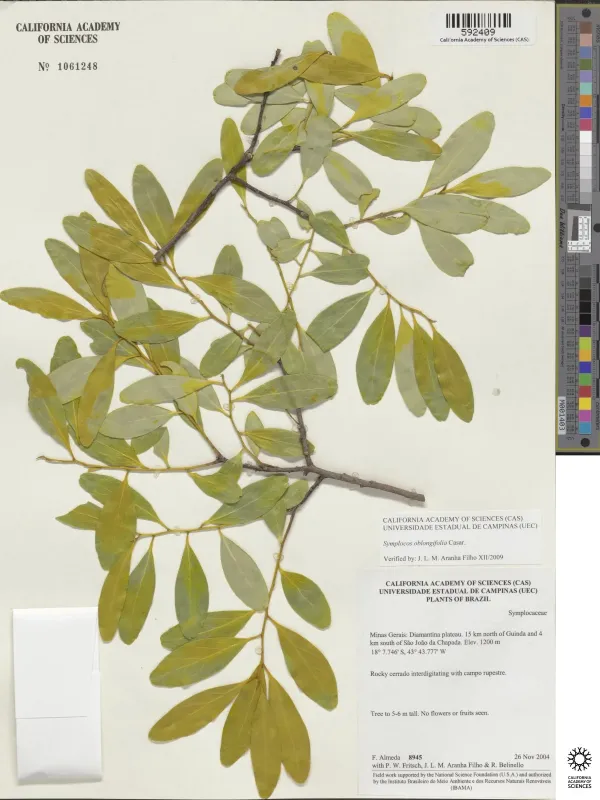
Description
Sowing dates
Symplocos oblongifolia belongs to the Symplocaceae family. Propagation of this species is typically carried out through seed sowing or stem cuttings under controlled greenhouse conditions.
Seeds require preliminary stratification to increase germination energy. Sowing is usually performed in a humus-rich, well-draining substrate, maintaining temperatures between 20–22 degrees Celsius.
Cuttings are taken during the summer months using semi-hardwood stems. Maintaining high humidity is essential for successful rooting, ensuring a stable survival rate for the young seedlings.
In its natural habitat, the plant grows in regions with tropical and subtropical climates. Its range spans parts of Southeast Asia, where it has adapted to humid, forested ecosystems.
Young plants require protection from direct sunlight during their first year. Once established, the culture shows moderate resistance to environmental factors, provided the agronomic standards are met.
Growing requirements
The culture prefers slightly acidic, well-draining soils rich in organic matter. Stagnant water in the root zone is detrimental to this species, necessitating strict control over soil moisture levels.
Optimal growth requires a stable temperature range without drastic fluctuations. The plant is sensitive to freezing temperatures and necessitates winter protection or indoor cultivation in cooler climate zones.
Light levels should be diffused, as excessive UV exposure can cause leaf scorch. In commercial production, shading nets are frequently utilized to maintain an ideal microclimate.
High air humidity is a key requirement for the members of this family. During dry seasons, misting systems or overhead irrigation are essential to maintain the necessary ambient moisture.
Regular applications of complex mineral fertilizers, with a focus on nitrogen during the active growth phase, promote the development of lush foliage and a strong root system.
Main diseases and pests
The primary pests affecting this culture include various species of scale insects and spider mites, which typically proliferate when humidity management is poor and ventilation is insufficient.
Fungal diseases, such as root rot, often develop due to over-irrigation or inadequate drainage. Proactive management involves adhering to strict watering protocols and utilizing fungicides when necessary.
Leaf spot diseases can spread rapidly in dense plantings with poor airflow. Regular sanitary pruning of affected branches helps to reduce the spread of pathogens throughout the crop.
Powdery mildew may occur when there are sharp temperature differences between day and night. Prevention focuses on maintaining a stable microclimate and timely use of biological control agents.
Pests such as thrips can cause damage to new growth. Routine monitoring of insect populations using sticky traps is a fundamental requirement for successful agronomic crop management.