
Giant White Bird of Paradise
Strelitzia nicolai
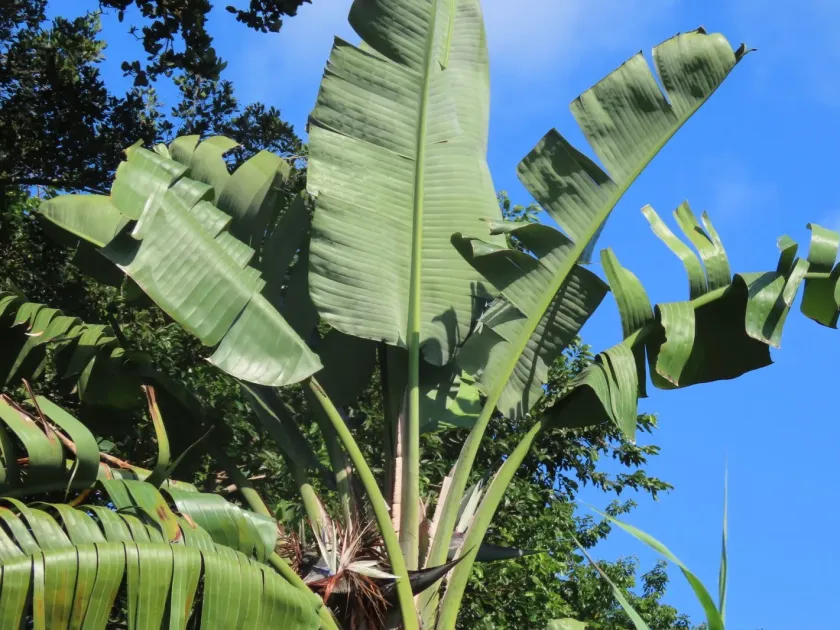
Description
Growing requirements
The Giant White Bird of Paradise (Strelitzia nicolai) is a prominent herbaceous perennial belonging to the Strelitziaceae family. Originating from the coastal regions of Southern Africa, it is widely cultivated globally for its impressive architectural foliage and large white flowers.
The species thrives in bright, indirect light conditions. While mature plants can withstand some direct sunlight, it is crucial to acclimate them gradually to prevent leaf scorch in controlled environments like conservatories or indoor settings.
Optimal growth requires a well-draining, nutrient-rich potting medium. A blend of peat moss, pine bark, and perlite is typically recommended to facilitate aeration and moisture retention while preventing the risk of waterlogging in the root system.
Temperature management is vital; the plant performs best in a range between 18°C and 26°C. It is frost-tender and must be protected from temperatures below 10°C, as cold exposure can cause significant physiological damage to the leaves.
Watering should be consistent throughout the active growing season. The substrate should be allowed to dry slightly between waterings, but the root ball must never become completely dehydrated, as this impacts the plant's ability to support its massive leaf surface.
Main diseases and pests
Common pests affecting Strelitzia nicolai include spider mites and scale insects, which favor the warm, enclosed conditions of domestic interiors. Regular monitoring and physical removal of these pests are essential to prevent infestation spread.
Root rot, driven by excessive soil moisture and poor drainage, is a significant threat that often leads to plant death. If diagnosed early, the plant may be salvaged through emergency repotting and the trimming of necrotic root tissue.
Leaf blight and fungal infections can manifest if air circulation is insufficient or if moisture remains on the foliage for extended periods. Promoting good airflow around the plant is a critical preventative measure against such pathogens.
Nutrient deficiencies, specifically in magnesium or iron, may show up as chlorosis, where the leaves lose their vibrant green color. Balanced fertilization using a high-quality liquid fertilizer during the spring and summer months mitigates this risk.
Providing optimal environmental conditions remains the most effective strategy against pests and diseases. By maintaining moderate humidity levels and preventing temperature extremes, the plant's natural resilience is significantly enhanced.