
White Bird of Paradise
Strelitzia alba
Description
Growing requirements
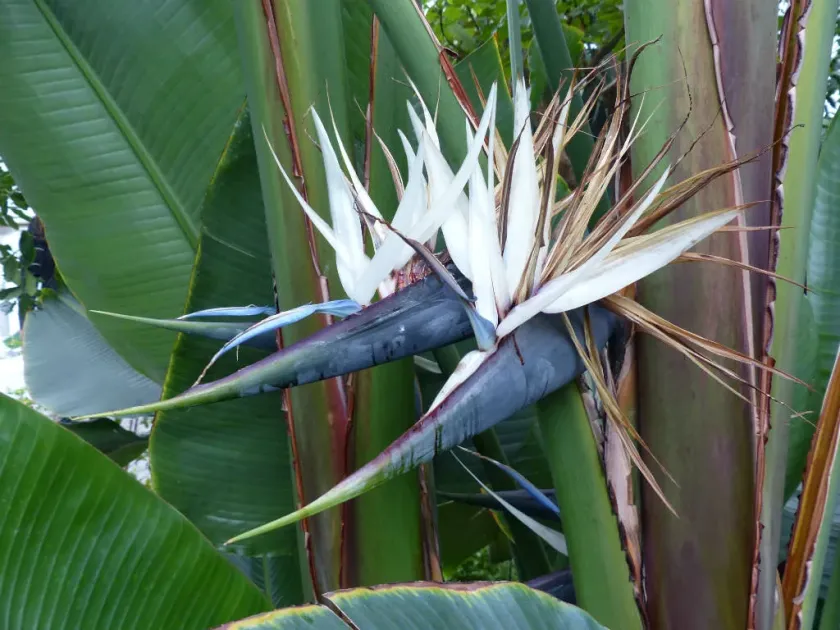
The White Bird of Paradise, Strelitzia alba, is a prominent member of the Strelitziaceae family, known for its tree-like appearance and large, paddle-shaped leaves. It is a robust perennial that can grow up to 10 meters tall in its native habitat.
Originating from the southern coastal regions of South Africa, this species thrives in environments with high humidity and consistent warmth. It is highly sensitive to frost, which limits its outdoor cultivation to tropical and subtropical regions.
Successful cultivation requires deep, well-draining soil rich in organic matter. A neutral pH level is ideal for nutrient uptake, and the soil structure should be loose enough to allow the thick, fleshy roots to expand freely.
Proper light management is essential, as the plant requires several hours of bright, direct sunlight to maintain its structural integrity. If cultivated in indoor spaces or conservatories, supplement lighting is often necessary for optimal growth.
Maintenance involves balanced fertilizing during the growing season and ensuring consistent hydration without waterlogging. Young plants need careful protection from strong winds that can shred the large foliage prematurely.
Main diseases and pests
Scale insects are among the most common pests affecting this species. They frequently colonize the underside of leaves and stems, requiring immediate treatment with horticultural oils or systemic insecticides to prevent severe damage.
Mealybugs can become a significant issue, particularly in protected environments with restricted airflow. These pests hide in leaf axils, necessitating thorough inspection and targeted cleaning to manage populations.
Root rot is a critical threat caused by overwatering or poor drainage systems. Since the plant has substantial root mass, identifying this problem early is vital to saving the specimen from permanent damage.
Fungal leaf spot diseases may appear if foliage remains wet for extended periods in environments with low light and poor ventilation. Keeping the leaf surfaces dry and ensuring good air circulation are the best prevention strategies.
General pest management should involve a routine schedule of inspection combined with integrated pest management (IPM) practices, ensuring the plant remains healthy throughout its long life cycle.