
Sweet prayer plant
Thaumatococcus daniellii
Description
Growing requirements
The sweet prayer plant (Thaumatococcus daniellii) is a rhizomatous herb belonging to the Marantaceae family. It is native to the tropical rainforests of West Africa, where it thrives in shaded environments.
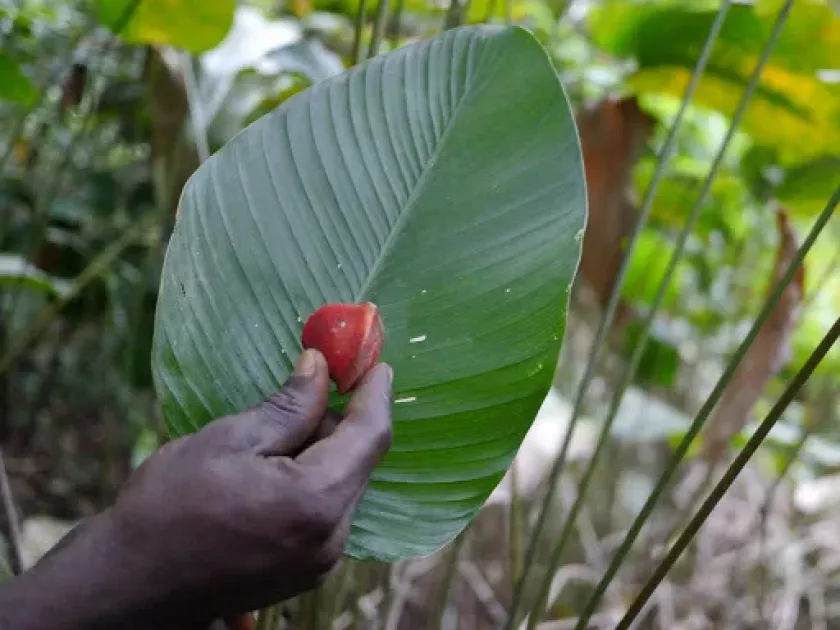
Botanically, the plant is characterized by large, broad leaves and distinctive pink to purple fruit capsules containing black, shiny seeds coated with a sweet, jelly-like aril.
The crop demands a humid, tropical climate with temperatures consistently between 22°C and 28°C. It is highly intolerant of dry air, cold drafts, and temperatures dropping below 10°C.
Soils must be fertile, well-draining, yet capable of retaining moisture. High organic content is essential for optimal growth, reflecting the plant's natural habitat in the forest understory.
Agricultural management often involves agroforestry systems, where existing canopy cover provides the necessary shade, preventing leaf scorch and maintaining high humidity levels.
Yield
The primary commercial interest in Thaumatococcus daniellii lies in the extraction of thaumatin, a natural protein-based sweetener recognized for being thousands of times sweeter than sucrose.
Beyond its sweetening properties, the plant is economically significant for its large, durable leaves. These leaves serve as a sustainable, natural alternative to plastic and foil wrappers in culinary traditions across West Africa.
The rhizomes are also harvested for local medicinal applications and fiber production, making the plant a multi-purpose crop that supports rural livelihoods and sustainable agricultural practices.
Yields are typically managed through long-term plantation cycles. Consistent harvesting of the fruit arils requires careful handling to preserve the biological activity of the protein compounds.
The global demand for non-synthetic, low-calorie additives makes this plant an increasingly important subject for sustainable bio-agriculture research and development.
Main diseases and pests
The crop is susceptible to fungal infections, particularly root rot, which is common in waterlogged or poorly drained soils. Maintaining proper spacing is crucial to prevent humidity-induced decay.
Pests such as stem-borers and defoliating insects can significantly impact plant health. Regular scouting and integrated pest management are necessary to protect the leaf and fruit yield.
Soil-borne pathogens represent a persistent risk in monoculture systems. Implementing crop rotation or maintaining biological diversity within the plantation can mitigate these risks effectively.
Sanitation practices, such as removing decaying plant material immediately, are essential to stop the spread of bacterial or fungal outbreaks within the crop canopy.
Due to the dual use of the plant (food and packaging), chemical pest control is restricted. Emphasis is placed on organic and biological solutions to maintain food-grade safety standards.