
Aeonium urbicum
Aeonium urbicum
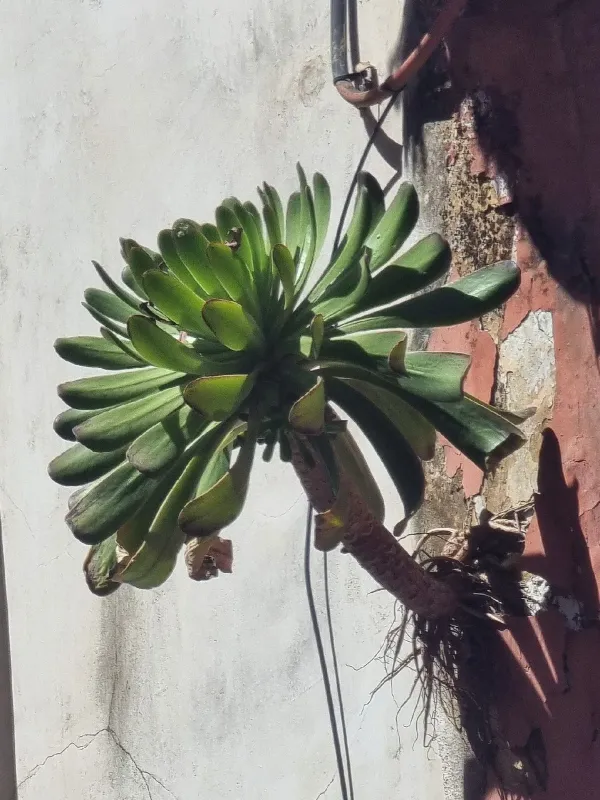
Description
Growing requirements
Aeonium urbicum is a striking succulent plant member of the Crassulaceae family. Native to the Canary Islands, specifically Tenerife, it thrives in rocky, arid, and well-drained volcanic environments.
The plant is distinguished by its large, dense, rosette-shaped foliage that sits atop a sturdy, upright stem. As the plant matures, it develops a sculptural, tree-like habit which is highly valued in ornamental horticulture.
Optimal growth requires intense sunlight to maintain the tight structure of the rosettes and the vibrant color of the leaves. Inadequate lighting will cause the plant to etiolate and lose its characteristic appearance.
Soil requirements are strictly focused on drainage. A specialized succulent or cactus mix containing perlite, pumice, and coarse sand is essential to prevent water stagnation around the root system.
The temperature range for Aeonium urbicum should ideally stay between 18°C and 25°C during the growing season. In winter, a cooling period with reduced light and minimal water is necessary to induce dormancy.
Main diseases and pests
Root rot, caused by overwatering or poor drainage, remains the most significant threat to the health of the plant. Once the root system is compromised by excessive moisture, the rot can spread rapidly to the stem.
Mealybugs are the primary pest concern, often colonizing the tight crevices between leaves. Their presence can be identified by a white, cottony substance, which necessitates immediate treatment with systemic insecticides.
Spider mites can also become a problem in environments with low humidity and high temperatures. They damage the leaf epidermis, causing mottling and reducing the photosynthetic efficiency of the succulent.
Fungal pathogens can occasionally affect the plant if airflow is restricted around the dense rosette, leading to leaf drop or decay. Maintaining good ventilation is a key preventative measure for all indoor specimens.
Proper hygiene, such as removing dead basal leaves, helps to minimize the habitat available for pests and fungi. Keeping the crown of the plant dry is critical to prevent opportunistic infections.