
Saucer plant
Aeonium tabuliforme
Description
Growing requirements
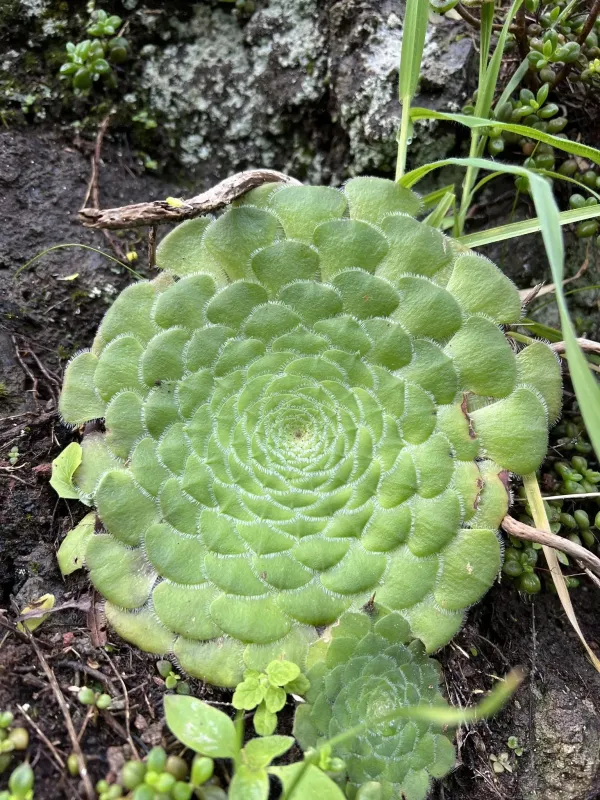
The Saucer plant, botanically known as Aeonium tabuliforme, belongs to the Crassulaceae family. It is native to the Canary Islands, specifically growing on steep cliff faces, which defines its unique, flat, disk-like growth habit that acts as a natural water-shedding mechanism.
To cultivate this species, provide bright, filtered sunlight. While it thrives in warm environments, it is sensitive to extreme heat and prolonged direct sun, which can scorch its densely packed leaves. During the winter, it enters a dormant phase and prefers cooler temperatures to thrive.
Soil requirements are strict: the medium must be highly porous and inorganic. A mixture of pumice, perlite, and coarse sand is essential to prevent moisture buildup. The root system is delicate and requires excellent aeration to remain healthy throughout the growing season.
Watering techniques are critical for this species. Water should be applied directly to the soil using a long-spout container, strictly avoiding the center of the rosette. Even small amounts of trapped water can cause the entire plant to rot within a very short period.
This succulent is primarily used for ornamental purposes in rock gardens, desert-themed displays, and home collections. Due to its architectural appeal, it is a prized specimen for enthusiasts who appreciate symmetry and unique structural forms in plant life.
Main diseases and pests
The primary threat to the Saucer plant is root and crown rot, caused by overwatering or poor drainage. Once decay begins in the central part of the rosette, it is often difficult to reverse, making preventative care of utmost importance for the gardener.
Mealybugs are a significant pest for this species, as the tight arrangement of leaves provides a perfect shelter. They are difficult to spot until a large colony is established, often requiring systemic insecticides to eliminate effectively.
Spider mites may affect the plant during low-humidity conditions. These pests thrive in dry environments and can cause significant damage to the epidermis of the leaves, resulting in unsightly scarring and weakened plant immunity.
Preventative measures include maintaining good air circulation around the plant at all times. Fresh air helps evaporate excess moisture and discourages the growth of fungal pathogens that frequently attack succulents in stagnant conditions.
If an infestation occurs, isolate the affected specimen immediately. Cleaning the leaves with a gentle insecticide or a soft brush dipped in alcohol can help remove pests, but careful monitoring must continue for several weeks to ensure a full recovery.