
Aeonium spathulatum
Aeonium spathulatum
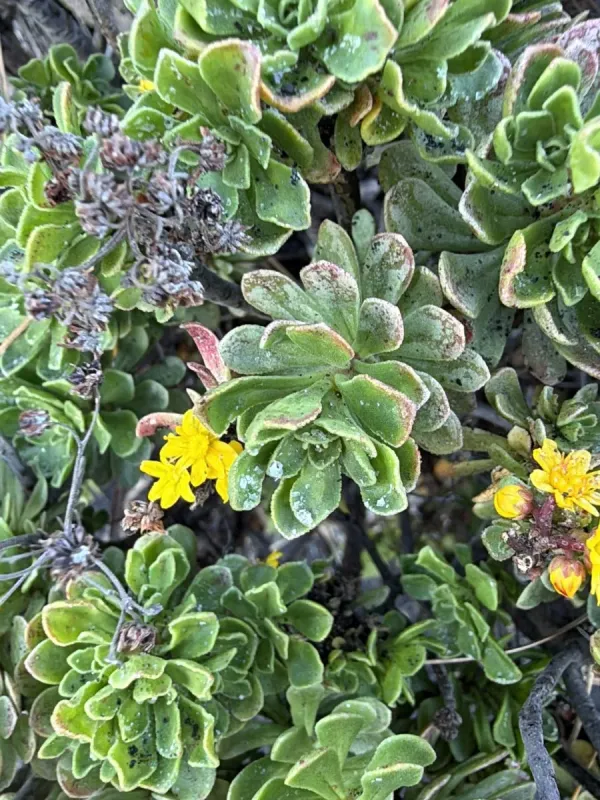
Description
Growing requirements
Aeonium spathulatum is a perennial succulent species belonging to the Crassulaceae family. Native to the Canary Islands, it is primarily found in arid, rocky habitats where it has evolved to thrive with minimal water resources.
The plant features distinctively spatulate leaves arranged in dense rosettes atop branching, woody stems. This structural architecture makes it an excellent choice for ornamental gardening in Mediterranean-style climates.
Successful cultivation requires a fast-draining, mineral-rich substrate. A standard mix should include grit, pumice, or coarse sand to ensure that excess water does not linger around the root system, which is vital for plant health.
Light intensity is the primary driver of growth and coloration. This species demands bright, direct sunlight to maintain the compact geometry of its rosettes and the vibrant hues on the leaf margins.
Temperature management involves mimicking its natural environment: warm days and cooler nights. It is sensitive to extreme frosts and requires protection if temperatures drop below freezing, making it an ideal candidate for greenhouse or container gardening.
Main diseases and pests
Root rot is the most common agronomic challenge. This condition is almost exclusively caused by overwatering or poor drainage, leading to the rapid decay of succulent tissues and subsequent failure of the plant.
Mealybugs are a frequent pest threat. They tend to congregate in the tight centers of the rosettes, where they feed on plant sap and can remain undetected until the infestation becomes severe.
Spider mites are another issue to monitor, especially in environments with poor air circulation and low humidity. Regular misting or monitoring for fine webbing can help detect these infestations early.
Cultural control remains the best defense against pathogens. Maintaining clean, sterile growing conditions and providing adequate spacing between plants significantly reduces the incidence of fungal and bacterial infections.
Chemical treatments should be used as a last resort. If necessary, horticultural oils or systemic insecticides are generally effective, provided the concentration is diluted sufficiently to prevent phytotoxicity to the succulent leaves.