
Aeonium hybrids
Aeonium hybrids
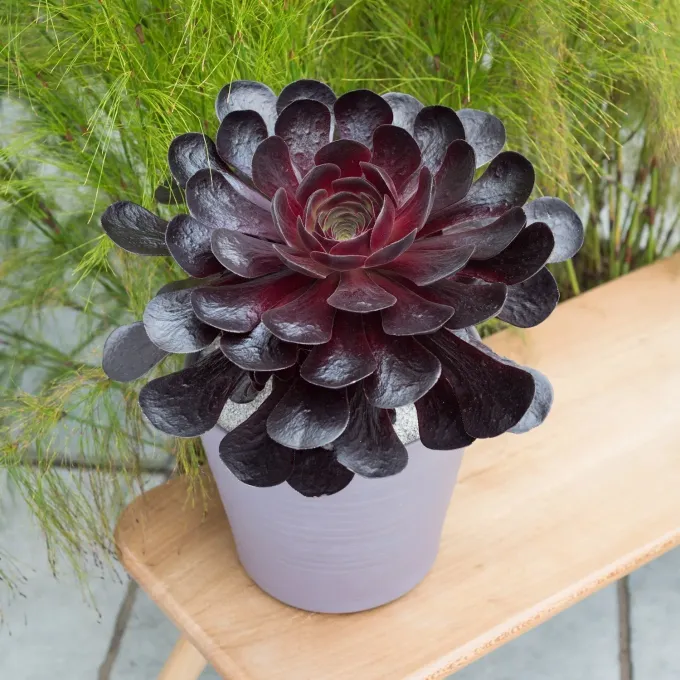
Description
Growing requirements
Aeonium hybrids are perennial succulent plants belonging to the Crassulaceae family. In a commercial context, these plants are highly valued for their sculptural beauty and are widely cultivated as ornamental crops in professional nursery settings.
The native range of the genus includes the Canary Islands and parts of Northern Africa. Modern hybrid forms are selected for their distinct foliage colors, ranging from deep purple to vibrant green, and for their ability to thrive in controlled greenhouse environments.
Botany-wise, the plant typically develops a thick, succulent stem topped with a dense rosette of leaves. This architectural growth habit allows the plant to store water efficiently, enabling it to survive in arid conditions with minimal maintenance.
Environmental requirements are focused on high light intensity to maintain compact growth and vibrant colors. In industrial agriculture, supplemental lighting is often employed to ensure consistent crop quality, particularly during short-day seasons.
The substrate must be porous, fast-draining, and slightly acidic or neutral. A mix comprising coarse sand, volcanic rock, and minimal organic matter is ideal for preventing waterlogging and promoting healthy root respiration, which is critical for long-term growth.
Main diseases and pests
Mealybugs and spider mites are the most common pests that can decimate a crop if not managed early. Effective management strategies involve integrated pest control and the application of systemic treatments to ensure the foliage remains pristine for the commercial market.
Root rot is the primary physiological and pathological threat to Aeonium crops, usually stemming from over-irrigation or inadequate soil drainage. Proper irrigation scheduling, allowing the medium to dry thoroughly between waterings, is essential for maintaining plant health.