
Blue Ginger
Dichorisandra thyrsiflora
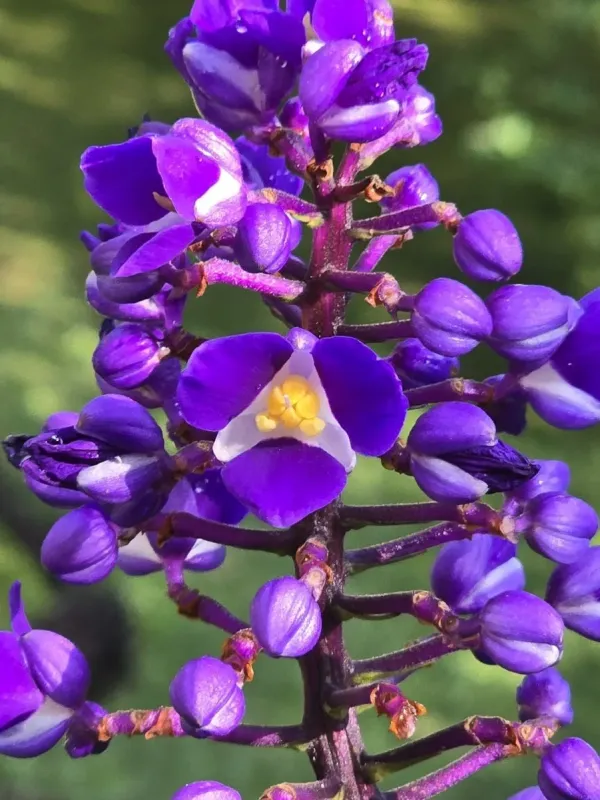
Description
Sowing dates
Blue Ginger (Dichorisandra thyrsiflora) is a member of the Commelinaceae family, originating from the rainforests of Brazil. It is predominantly propagated through rhizome division or stem cuttings during the spring season.
When propagating via cuttings, select healthy stems with at least two nodes. Placing them in a moist, well-draining potting mix with added bottom heat will promote rapid root development.
Seed sowing is less common but achievable in early spring. Seeds should be sown on the surface of a light, peat-based substrate and covered only slightly to allow for adequate light exposure.
The development of the root system is robust, necessitating large containers early on to prevent the plant from becoming root-bound and slowing down its vertical growth.
Once established, transplanting should be performed annually to provide fresh nutrients and space for the expanding rhizomatous base, which is characteristic of the species.
Growing requirements
This species thrives in environments that mimic its native tropical habitat. It requires bright, indirect light, as direct afternoon sun can scorch its lush, dark green foliage.
Soil requirements involve a rich, slightly acidic mix. A blend of compost, coarse sand, and peat moss ensures excellent drainage while retaining sufficient moisture for the roots.
Consistent moisture is essential during the growing season. The plant should be watered thoroughly, but drainage must be flawless to prevent standing water at the base of the stems.
High ambient humidity is crucial. In residential or greenhouse conditions, supplemental misting or the use of humidity trays is recommended to prevent leaf tip necrosis.
Temperature management is straightforward: keep the plant above 15 degrees Celsius. It is sensitive to cold drafts and should be protected from winter chills near windows or doors.
Main diseases and pests
Spider mites are the most common pest, especially in indoor environments with dry air. They target the undersides of leaves, leading to yellowing and stunted growth.
Mealybugs can also infest the plant, settling in the leaf axils where they feed on the plant's sap and weaken the overall structure of the ginger-like stems.
Root rot, caused by overwatering or poorly aerated soil, is the most severe disease threat. It is often irreversible once symptoms manifest in the stems.
- Maintaining high humidity levels to discourage spider mites.
- Using neem oil or insecticidal soap for biological control.
- Ensuring good drainage to prevent fungal root infections.
Regular monitoring of the foliage and keeping the planting area clean are effective cultural practices that keep Dichorisandra thyrsiflora healthy and free of infestations.