
Dichorisandra penduliflora
Dichorisandra penduliflora
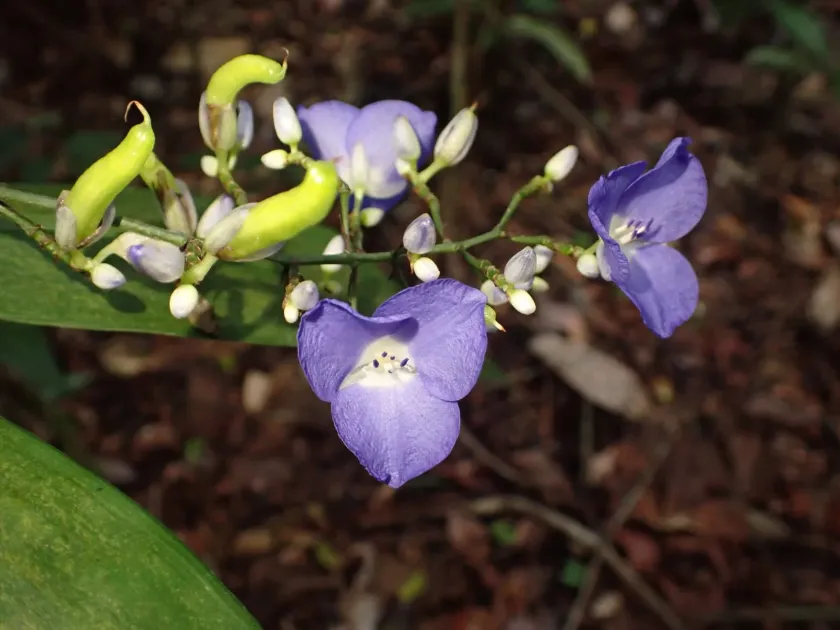
Description
Growing requirements
Dichorisandra penduliflora is a perennial herbaceous plant belonging to the Commelinaceae family, native to the tropical regions of South America. It is highly valued in horticulture for its cascading inflorescences and lush, decorative foliage that thrives in warm, humid forest understories.
The plant exhibits distinct botanical features including lanceolate leaves with a prominent vein structure. The inflorescences emerge as striking blue-purple flowers that hang downwards, giving the plant its common name and making it a sophisticated addition to tropical garden collections.
To cultivate this species successfully, one must maintain an environment with consistent temperatures between 20 and 25 degrees Celsius. It is essential to protect the foliage from direct sunlight, as the plant is adapted to the filtered light of rainforest canopies.
Soil requirements include a nutrient-rich, well-draining potting medium that mimics natural forest soil. Proper aeration is vital for root health, and the pot must contain adequate drainage holes to prevent the accumulation of excess water during the irrigation process.
Moisture management is a cornerstone of the agrotechnology for this species. Regular misting is recommended to simulate the natural humidity of its native habitat, ensuring that the ambient air remains humid throughout the growing season to prevent leaf tip necrosis.
Main diseases and pests
Common pests affecting this crop include spider mites, mealybugs, and scale insects, which often thrive in indoor conditions with restricted airflow. Monitoring the undersides of leaves is critical to catching an infestation before it spreads throughout the canopy.
Pathogenic threats primarily include root and crown rots resulting from overwatering or inadequate soil aeration. Maintaining a strict hygiene protocol and ensuring proper water drainage are the most effective strategies for preventing fungal infections in this tropical species.