
Dichorisandra mosaica
Dichorisandra mosaica
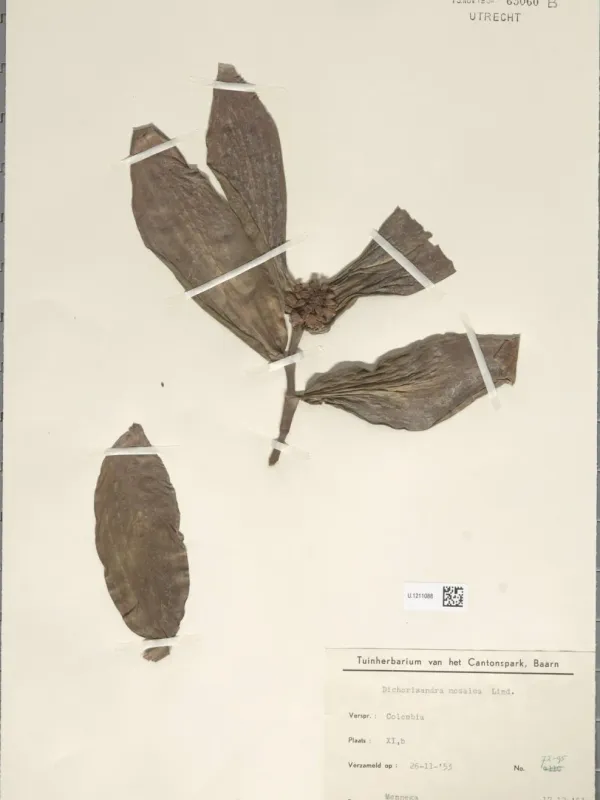
Description
Growing requirements
Dichorisandra mosaica is a decorative herbaceous perennial belonging to the Commelinaceae family. Native to the tropical rainforests of South America, specifically Peru and Ecuador, this plant is well-known for its striking foliage patterns which resemble a complex mosaic of darker and lighter veins.
Botanically, the species is defined by its succulent-like, creeping, or ascending stems and broad, decorative leaves. It is a shade-loving plant that thrives in high-humidity environments, making it a specialized choice for indoor collections or greenhouse displays.
The climate requirements for this plant are stringent, focusing on warm ambient temperatures consistently maintained between 20 and 26 degrees Celsius. Exposure to cold drafts must be strictly avoided, as the plant quickly shows signs of distress through leaf yellowing or sudden wilting.
Regarding soil, Dichorisandra mosaica requires a well-draining, nutrient-rich potting medium. A blend of peat, perlite, and bark is ideal to ensure proper aeration while maintaining the moisture levels that the plant needs for healthy metabolic activity throughout the growing season.
Watering practices should center on maintaining uniform moisture without ever allowing the plant to sit in water. High atmospheric humidity is just as important as soil moisture, thus frequent misting or the use of pebble trays is recommended to replicate the natural rainforest environment.
Main diseases and pests
The primary pests affecting this plant are spider mites, especially in indoor environments with low humidity. Monitoring the underside of the leaves is crucial, and immediate isolation is recommended if any infestation is detected to protect the rest of the collection.
Common diseases generally involve fungal infections of the stems and roots caused by poor air circulation or overwatering. Maintaining a sterile growing environment and ensuring the substrate allows for sufficient drainage are the most effective preventative measures against these pathogens.