
Pseudalcantarea grandis
Pseudalcantarea grandis
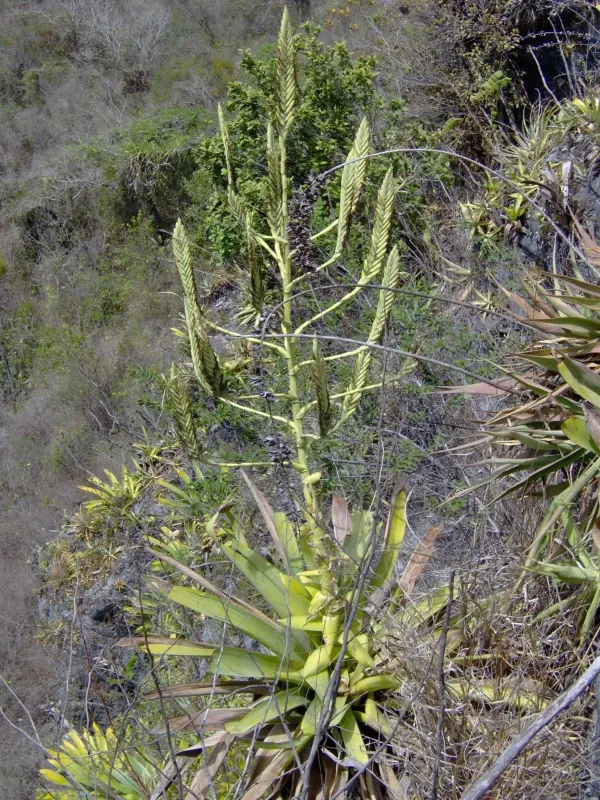
Description
Growing requirements
Pseudalcantarea grandis is a distinctive species within the Bromeliad (Bromeliaceae) family. Originating from the tropical forests of Mexico, it grows primarily as an epiphyte, anchored to tree branches or rocky crevices.
The plant requires bright, filtered light to maintain its structural integrity and vibrant appearance. Exposure to intense afternoon sun should be strictly avoided to prevent scorching the broad, succulent leaves.
Temperature management is crucial; the plant thrives best in a range between 20°C and 26°C. It is sensitive to cold drafts and should be kept away from direct air conditioning or heating sources.
Humidity levels must be consistently high, ideally between 70% and 80%. This mimics the natural forest canopy environment where the plant absorbs moisture and nutrients through its central tank.
The planting medium must be loose and well-draining. A typical mix includes orchid bark, charcoal, perlite, and a small amount of sphagnum moss to ensure roots do not stay waterlogged while providing sufficient aeration.
Main diseases and pests
The most common threat to Pseudalcantarea grandis is root rot caused by improper watering practices or a substrate that lacks sufficient drainage and air permeability.
Pests like mealybugs and scale insects frequently target the base of the leaves and the central rosette, particularly in indoor environments with limited natural air circulation.
Fungal leaf spots may occur if water is allowed to stagnate in the rosette under low light or cool conditions. Maintaining proper airflow is essential for preventing these outbreaks.
Over-fertilization can damage the plant's delicate tissues. Only weak, balanced liquid fertilizers applied sparingly during the growing season are recommended to support healthy development.
Regular visual inspection of the plant's heart and leaf axils is necessary to detect potential infestations early before they compromise the structural integrity of the plant.