
Catopsis nutans
Catopsis nutans
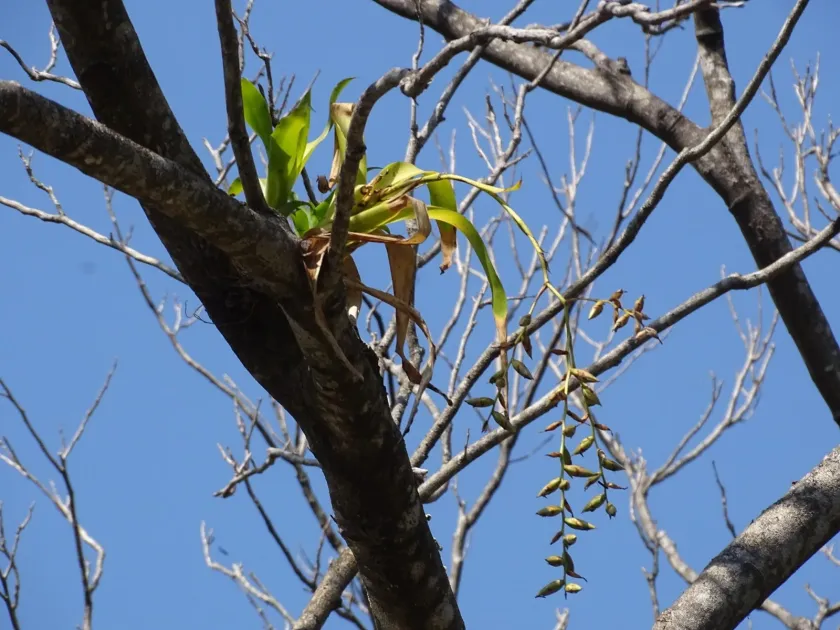
Description
Growing requirements
Catopsis nutans is a fascinating epiphytic species belonging to the Bromeliaceae family. Originating from the tropical regions of Central and South America, it naturally grows on tree branches, utilizing its environment to capture moisture and nutrients from the air and decaying debris.
To cultivate this plant successfully, one must replicate its natural humid habitat. It requires high relative humidity and consistent warmth, ideally between 20°C and 25°C. Stability is key, as sudden changes in temperature or prolonged drought can severely stress the plant.
The planting substrate for Catopsis nutans must prioritize excellent drainage and aeration. Epiphytic bromeliads struggle in standard soil; therefore, a mix of pine bark, perlite, and sphagnum moss is recommended to prevent root suffocation and maintain the ideal moisture balance.
Watering is unique for this species; it should be applied into the central "tank" or rosette of the leaves. Using purified or rainwater is essential to prevent mineral buildup and to protect the sensitive leaf tissue from impurities found in tap water.
Lighting should be bright but filtered. Direct sunlight is detrimental to the plant, causing leaf scorch and dehydration of the rosette. Proper air circulation is just as important as light, as it prevents the stagnation of water and the subsequent growth of harmful microorganisms.
Main diseases and pests
Root rot and crown rot are the most common threats to Catopsis nutans. These diseases are almost always caused by overwatering or poor drainage, which creates a hypoxic environment in the root zone, leading to rapid decay of the plant tissue.
Mealybugs are frequent pests that infest the hidden areas within the dense foliage. Because they hide deep between the leaves, they are often difficult to control without using systemic insecticides or regular physical checks of the plant's heart.
Scale insects present another significant risk, often appearing in clusters on the undersides of leaves or along the stems. Their presence weakens the plant by extracting vital sap, which can eventually lead to secondary infections by fungal pathogens.
Spider mites can rapidly proliferate if the ambient humidity is insufficient. These pests cause discoloration and stippling on the leaves, which significantly reduces the plant's ability to perform photosynthesis effectively and degrades its aesthetic appeal.
Fungal leaf spots are a potential problem if the plant is kept in an environment with high humidity but stagnant air. Proper spacing between plants and regular monitoring for early signs of decay are essential parts of any successful agricultural or decorative care program for this species.