
Catopsis morreniana
Catopsis morreniana
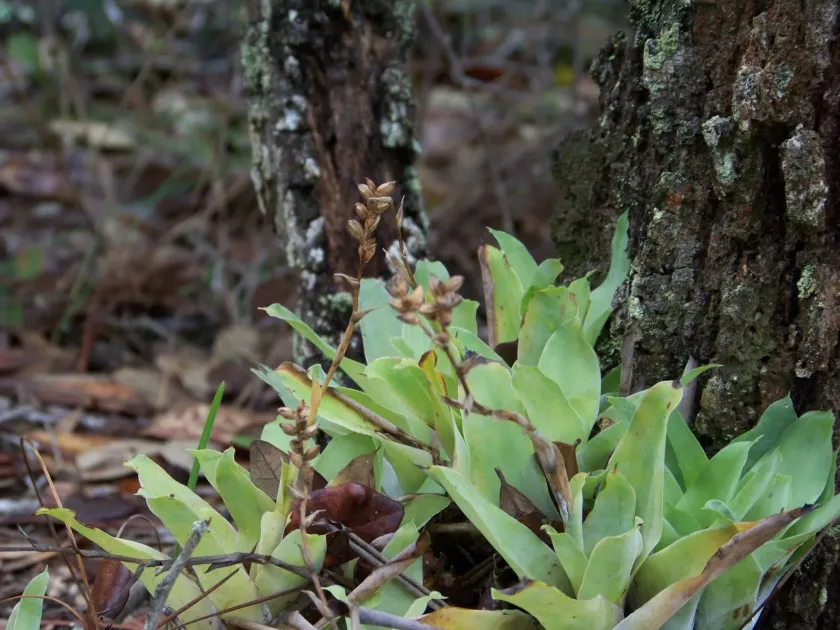
Description
Growing requirements
Catopsis morreniana is a member of the Bromeliaceae family, widely known as a fascinating epiphytic plant originating from the tropical regions of Central and South America. It typically thrives in humid environments, anchoring itself to tree branches and bark.
In cultivation, this species requires a stable environment with high humidity levels, often necessitating the use of a greenhouse or a controlled indoor climate. It is not suitable for regions with arid or cold weather conditions without specialized equipment.
Watering techniques for Catopsis morreniana are specific; the central rosette must be kept partially filled with water. It is essential to use soft, mineral-free water to prevent salt accumulation and ensure the plant's long-term vitality and leaf health.
The choice of substrate is critical for this species. Being an epiphyte, it does not tolerate dense potting soil. A well-draining medium, such as orchid bark mixed with perlite or long-fiber sphagnum moss, is ideal for keeping the roots aerated.
Lighting should be bright but filtered to protect the leaves from scorching. While the plant can survive in lower light, vibrant color and proper rosette formation depend on adequate light intensity, usually provided by east-facing windows or supplemental lighting.
Main diseases and pests
Mealybugs and scale insects represent the most significant pest threats to Catopsis morreniana. These pests often congregate in the tight crevices of the leaf base, making them difficult to detect until the plant starts showing signs of stunted growth.
Fungal infections, particularly root and crown rot, are common outcomes of improper drainage or poor air circulation. Once the base of the rosette begins to soften or turn dark, the condition often requires urgent removal of infected parts.
Spider mites are frequently encountered during warmer, drier months. These tiny pests pierce the leaf tissue to feed on cell sap, leading to the development of unsightly stippling and eventual leaf dieback if not controlled with consistent misting.
Preventive care involves frequent inspection of the leaf axils and maintaining a clean environment around the plant. If infestation occurs, manual removal using a soft brush or gentle insecticidal soap is generally safer for the foliage than harsh chemicals.
Regular maintenance ensures that water within the central rosette remains fresh. Stagnant, foul-smelling water can promote bacterial growth, which is a major precursor to tissue decay in sensitive bromeliad species like Catopsis morreniana.