
Blechnum penna-marina
Blechnum penna-marina
Description
Growing requirements
Blechnum penna-marina, commonly known as the alpine water fern, is a resilient creeping fern belonging to the Blechnaceae family. Native to the southern regions of South America, Australia, and New Zealand, this plant has evolved to thrive in cool, moist, and temperate climates.
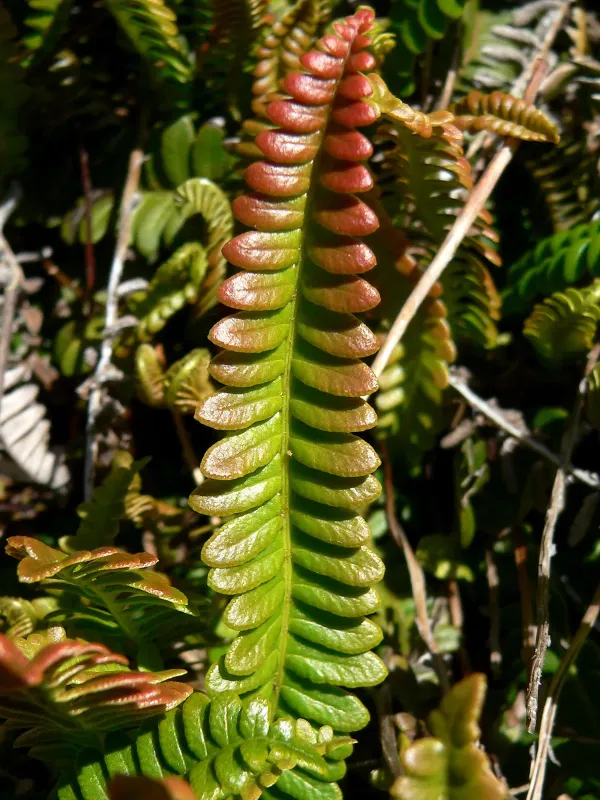
The plant is distinguished by its creeping rhizomes, which allow it to spread across the ground, creating a dense, evergreen mat of pinnate fronds. A notable botanical feature is the seasonal color shift, where new growth emerges with a striking bronze or pink hue before maturing into a lush, dark green foliage.
Success in cultivation requires a site that mimics the plant's natural habitat: partial to full shade and moist, acidic, humus-rich soil. It is vital to maintain consistent soil moisture, as the plant does not tolerate prolonged drought, but the soil should be well-draining to prevent root rot in wetter conditions.
For horticultural care, applying a layer of organic mulch in the spring helps retain soil moisture and suppresses weeds. The fern is remarkably hardy and can withstand freezing temperatures; however, in regions with harsh, dry winters, protection against wind desiccation is recommended for optimal plant health.
Blechnum penna-marina is primarily used in ornamental landscaping as a low-maintenance groundcover. It is highly valued in rock gardens, along the damp edges of water features, or as a shade-tolerant carpet under larger trees and shrubs where its texture adds a distinct natural aesthetic.
Main diseases and pests
The plant is generally robust, but poor drainage can lead to root pathogens and fungal leaf spots. Ensuring that the crown of the plant is not buried too deeply and maintaining adequate air circulation are the best defensive measures against common fungal outbreaks in nursery or garden settings.
Slugs and snails are the most frequent pests, particularly during the tender period of new frond expansion in spring. Gardeners can manage these threats through physical barriers or by maintaining a garden environment that discourages pest populations, such as avoiding excessive debris accumulation.