
Blechnum occidentale
Blechnum occidentale
Description
Growing requirements
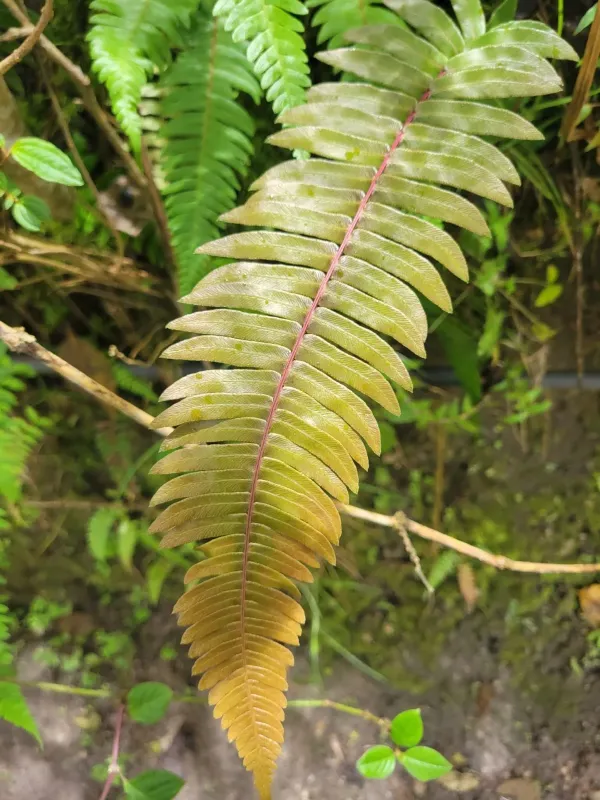
Blechnum occidentale is an evergreen fern belonging to the Blechnaceae family. Naturally occurring across tropical and subtropical regions of the Americas, this species thrives in humid forest floors, which dictates its specific needs when brought into cultivation.
Botanically, it is characterized by its pinnate fronds that form elegant, symmetrical rosettes. A striking feature of the plant is the juvenile foliage, which often emerges with a vivid pinkish-red or coppery tint before transitioning to a deep, lustrous green as the fronds reach maturity.
Successful cultivation requires strict adherence to environmental conditions. The plant demands high humidity and constant, moderate temperatures. It performs best in filtered light or partial shade, as direct sunlight can quickly damage the delicate cuticle of the fronds, leading to leaf scorching.
The substrate should be porous and well-draining, mimicking the forest litter found in its native habitat. A mixture containing peat, perlite, and bark provides the necessary aeration for the rhizome system, ensuring that moisture is retained without causing the roots to become waterlogged.
In terms of agricultural and horticultural use, this fern is highly valued as an ornamental specimen for conservatory displays and indoor gardens. It is frequently employed in container gardening and terrarium arrangements where its distinct foliage texture can be highlighted.
Main diseases and pests
The primary pests affecting Blechnum occidentale are scale insects, mealybugs, and spider mites. These pests thrive in dry environments and can cause significant damage to the fronds, leading to chlorosis, stunted growth, and potential death if infestations are not managed early.
Pathological threats include root rot and fungal leaf spot diseases, which are usually associated with poor drainage or stagnant air conditions. Maintaining a proper balance of hydration and ventilation is crucial to preventing the development of these issues within the fern collection.