
Blechnum indicum
Blechnum indicum
Description
Growing requirements
Blechnum indicum is a species of fern belonging to the Blechnaceae family, native to tropical Asia, Australia, and the Pacific Islands. It is naturally adapted to wetland environments, frequently found in marshes, along riverbanks, and in mangrove-adjacent zones where moisture is abundant year-round.
The cultivation of this plant requires a precise microclimate characterized by high humidity and moderate temperatures, ideally between 20 and 28 degrees Celsius. The soil should be acidic, rich in organic matter, and consistently moist but with sufficient drainage to prevent root asphyxiation during water stagnation.
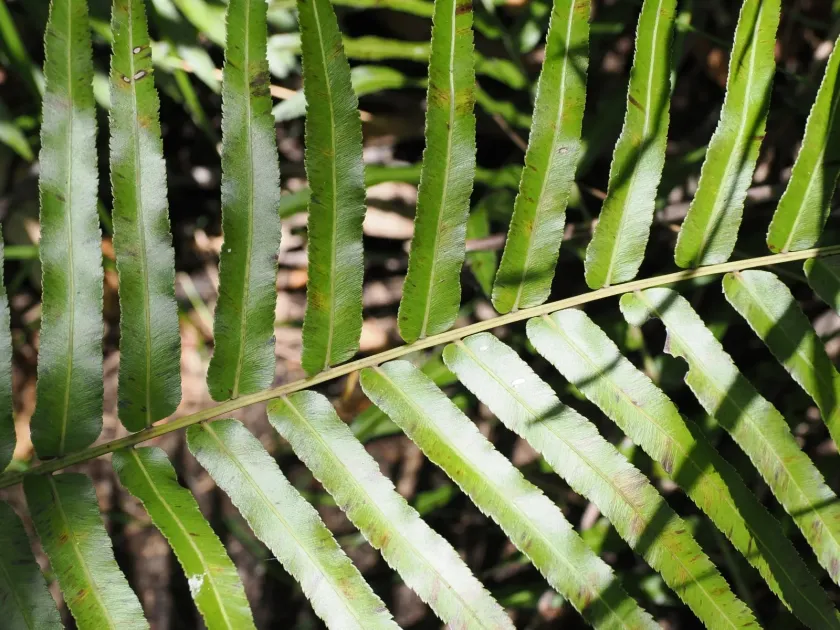
Botanically, it is defined by its rhizomatous structure and stiff, upright fronds. These ferns thrive in low-light conditions, making them suitable for shaded greenhouse environments. They are hardy only in frost-free tropical or subtropical climates, which dictates their cultivation solely under glass in temperate zones.
Agronomic practices for Blechnum indicum involve regular misting to maintain atmospheric humidity and consistent irrigation with non-saline water. Fertilizer application must be cautious, as these ferns are sensitive to salt accumulation in the root zone, potentially leading to leaf tip necrosis.
The primary use of this crop is ornamental, specifically for landscaping wet environments, public gardens, and conservatory displays. Its ability to tolerate wet soil conditions makes it a valuable species for specific ecological restorations and the design of indoor aquatic landscapes.
Main diseases and pests
Common threats to this fern include fungal pathogens such as leaf spot and root rot, often triggered by poor air circulation and excessive moisture in the greenhouse environment. Maintaining optimal spacing and proper ventilation is critical to preventing these infections.
Insect pests, including scale insects and spider mites, pose a significant risk to the plant's health. These pests often proliferate when humidity is not balanced with proper airflow. Effective management involves regular monitoring, manual removal, and the targeted application of horticultural oils or approved insecticides.