
Blechnum fraseri
Blechnum fraseri
Description
Growing requirements
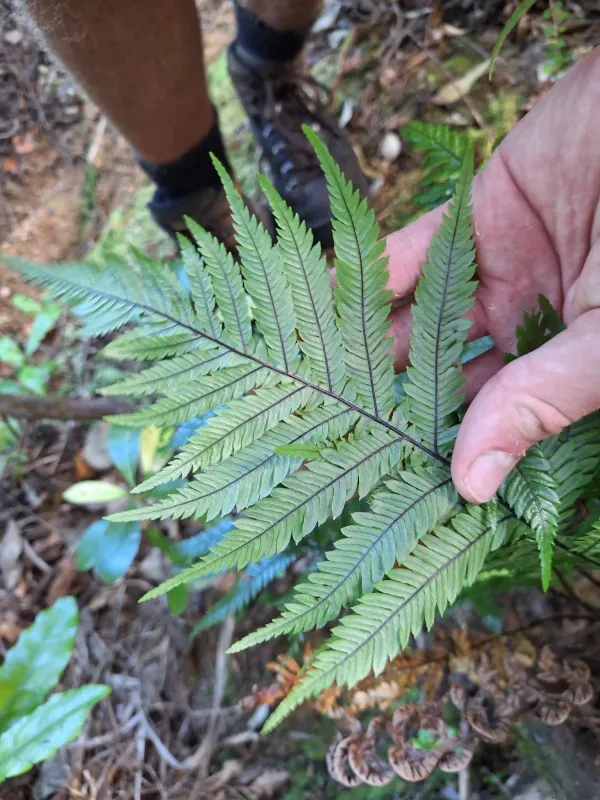
Blechnum fraseri is a distinct species of tree fern belonging to the Blechnaceae family. Unlike common terrestrial ferns, this plant develops a noticeable trunk, providing a structural elegance that makes it a prized ornamental specimen in specialized botanical collections.
The species is native to the humid tropical forests of the South Pacific, specifically found in regions of New Zealand and Australia. It thrives in high-humidity environments characterized by filtered light, mimicking the forest floor conditions of its original habitat.
Regarding climate, Blechnum fraseri requires a stable temperature range, ideally between 18°C and 24°C. It is sensitive to extreme heat and cold, so maintaining a consistent environment is vital to prevent the fronds from scorching or curling due to thermal stress.
The planting substrate must be porous and slightly acidic, mimicking the natural leaf litter found in tropical forests. A mixture of peat, perlite, and pine bark is recommended to ensure both moisture retention and essential aeration for the root system.
Humidity management is the most demanding aspect of its cultivation. The plant requires a relative humidity level of at least 65 percent. In indoor settings, this should be maintained through frequent misting or the use of automated fogging systems during the growing season.
Main diseases and pests
Scale insects are the most common pest problem for this fern. These pests attach themselves to the undersides of the fronds and the stem, draining plant sap and causing yellowing. Regular manual inspection and cleaning are necessary to prevent infestations.
Spider mites can rapidly proliferate if the air becomes too dry. They feed on the chlorophyll-rich parts of the foliage, leaving fine webbing behind. Increasing local humidity and ensuring adequate air circulation are the most effective ways to mitigate mite activity.
Root rot is a major threat caused by overwatering or poorly drained containers. If the roots remain saturated for extended periods, they become susceptible to anaerobic bacteria and fungi that can collapse the plant's vascular system.
Mealybugs are another potential threat, often hiding in the crown or the crevices of the fern’s trunk. If detected, systemic insecticides should be applied carefully according to manufacturer instructions to avoid phytotoxicity on delicate fronds.
To ensure long-term health, always isolate new plants before introducing them to an established collection to prevent the spread of hidden pathogens or insects. Pruning should only be done using sterile tools to avoid transmitting diseases into the vascular tissues.