
Asplenium seelosii
Asplenium seelosii
Description
Growing requirements
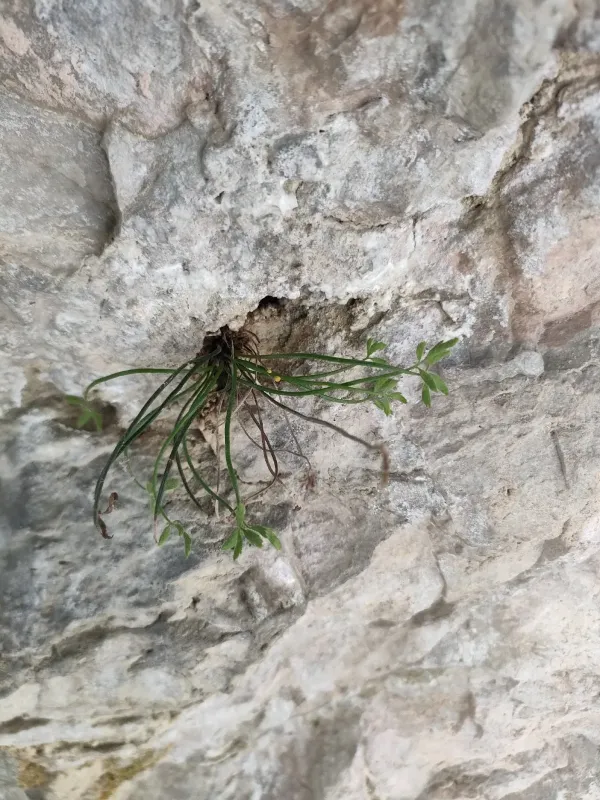
Asplenium seelosii is a rare species of miniature fern belonging to the Aspleniaceae family. This plant is a specialized lithophyte that exclusively inhabits crevices in limestone cliffs, demonstrating extreme adaptation to harsh environments.
The native distribution area is restricted to the high-altitude mountain ranges of Europe, particularly the Alps in Austria and Italy. It survives in rocky fissures where soil accumulation is minimal, relying on moisture condensation and mineral nutrients from the rocks.
Botanically, it forms small, dense rosettes composed of leathery, deep-pinnate fronds. The rhizome is short and creeping, allowing it to anchor securely to vertical rock faces, which serves as its primary protection against environmental exposure.
Environmental requirements for this species include high air humidity, cooler temperatures, and excellent drainage. It does not possess any agricultural utility, and its growth is strictly tied to natural rock formations, making standard cultivation impossible.
Regarding its economic use, it is not an agricultural crop. Its value is strictly ecological and scientific, as it serves as an indicator species for the health of limestone alpine ecosystems and is protected by conservation laws.
Main diseases and pests
The primary threat to Asplenium seelosii is habitat loss driven by climatic shifts. As mountain temperatures rise, the niche that this specialized fern occupies becomes increasingly unstable due to lack of traditional snow-melt moisture.
Human activities, such as rock climbing, infrastructure development, and uncontrolled collection for private herbariums, significantly endanger the remaining populations. Because of its slow growth rate, the plant cannot recover from physical damage.
Biological threats include competition from more robust pioneer plants that migrate to higher altitudes due to global warming. This encroachment limits the available rock crevices, forcing the fern into smaller, less suitable pockets of the cliff face.
In terms of diseases, the plant is susceptible to various root rot pathogens when environmental conditions are not ideal. Lack of proper air circulation, which is essential for lithophytic plants, leads to fungal infections that can decimate a rosette quickly.
Pest pressure is generally low in its native habitat; however, in artificial settings, the plant may be vulnerable to spider mites or nematodes. Protection efforts currently focus on habitat preservation rather than active cultivation or pest management.