
Orbea variegata
Orbea variegata
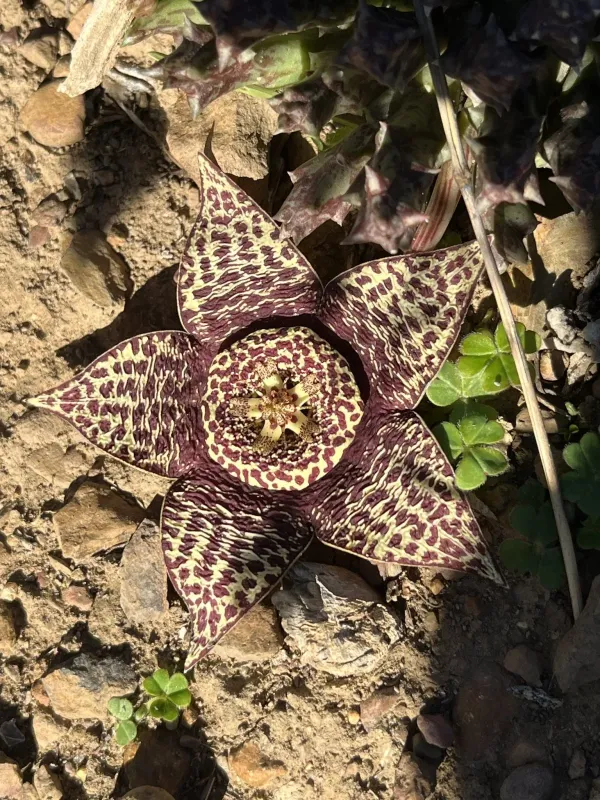
Description
Growing requirements
Orbea variegata is a perennial succulent belonging to the Apocynaceae family. Native to the coastal regions of South Africa, it has evolved to thrive in rocky environments with minimal moisture and nutrient-poor, gritty soils.
For successful cultivation, the growing medium must be highly porous. A mixture of loamy soil and a significant proportion of coarse sand or perlite is essential to ensure excellent drainage and prevent the roots from rotting.
The plant requires bright, indirect light to maintain its compact growth form. While it can tolerate some morning sun, exposure to intense midday sunlight should be restricted to prevent chlorosis and tissue damage.
Temperature management is key to its lifecycle. During the growing season, it prefers temperatures between 22 and 26 degrees Celsius, whereas winter dormancy requires cooler temperatures to initiate the budding process.
In terms of agricultural and horticultural use, this species is primarily cultivated for ornamental purposes. It is widely prized by collectors for its star-shaped, variegated flowers and ease of propagation via stem cuttings.
Main diseases and pests
The primary threat to the crop is root rot caused by stagnant water in the root zone. Overwatering is the most common mistake in managing this succulent, leading to rapid stem decay.
Pest pressure is mainly exerted by mealybugs and spider mites. These pests thrive in dry environments and can quickly infest stems, causing yellowing and stunted growth if left unmanaged.
Preventive measures include maintaining appropriate spacing between plants to allow for airflow and monitoring humidity levels to discourage mite populations.
Chemical control involving systemic insecticides is recommended if infestations become severe, provided the plant is not currently in a flowering stage to protect pollinators.
Regular sanitation of the growing environment and prompt removal of infected plant material are essential practices to maintain the health and vigor of the succulent crop.