
Orbea semota
Orbea semota
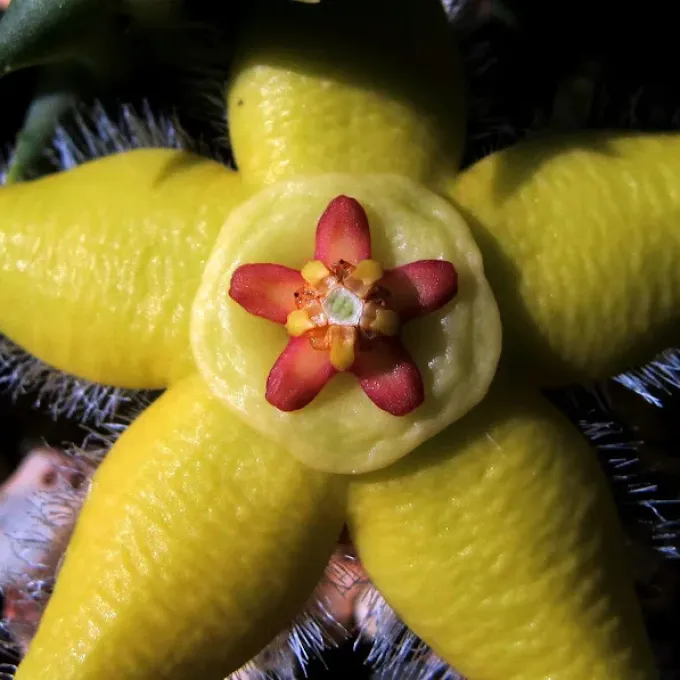
Description
Growing requirements
Orbea semota is a fascinating succulent species belonging to the Apocynaceae family. It is recognized for its short, fleshy, upright stems with prominent tubercles, which form dense, attractive mats over time, reflecting its evolutionary adaptation to arid environments.
The plant originates from the rocky, semi-arid regions of East Africa, specifically Kenya and Tanzania. In its native habitat, it grows in rocky outcrops or among low shrubs, which provide partial shade and protect the plant from the harshest direct equatorial sunlight.
For successful cultivation, Orbea semota requires bright, indirect light. Providing adequate illumination is crucial to maintaining the compact growth habit and proper coloration of the stems, which can turn reddish under optimal light stress.
The soil requirements are strict: the medium must be highly porous and inorganic-heavy to ensure rapid drainage. A standard succulent mix should be supplemented with extra perlite, pumice, or sharp sand to prevent the roots from remaining damp for too long.
Watering practices are the most critical aspect of care. The substrate must dry out completely between waterings. During the winter dormancy period, watering should be significantly reduced or stopped entirely to mimic the dry season of its natural African habitat.
Main diseases and pests
The most significant threat to Orbea semota is rot, which is caused by poor drainage or overwatering. Once rot settles into the fleshy stems, it can rapidly progress to the root system, often resulting in the total loss of the specimen if not caught early.
Mealybugs are the primary pest concern for this species. They tend to congregate in the deep grooves between the stem tubercles, where they are shielded from physical contact. Their feeding causes stunted growth and can attract sooty mold.
Spider mites can also become an issue during periods of very low atmospheric humidity. These tiny pests pierce the epidermis, leading to discolored patches on the stems that detract from the plant's aesthetic value and compromise its health.
Effective management includes regular monitoring and maintaining good air circulation. Preventive measures involve avoiding overhead watering, which helps prevent moisture from accumulating in the stem crevices, a common entry point for fungal spores.
In case of severe infestation or decay, propagation through cuttings is a vital survival strategy for the plant. By taking healthy apical cuttings, drying them for several days, and replanting them in sterile substrate, one can effectively preserve the genetic line.