
Edithcolea grandis
Edithcolea grandis
Description
Growing requirements
Edithcolea grandis is a unique perennial succulent belonging to the Apocynaceae family, subfamily Asclepiadoideae. In its natural habitat, this plant is found in the arid regions of East Africa and the Arabian Peninsula.
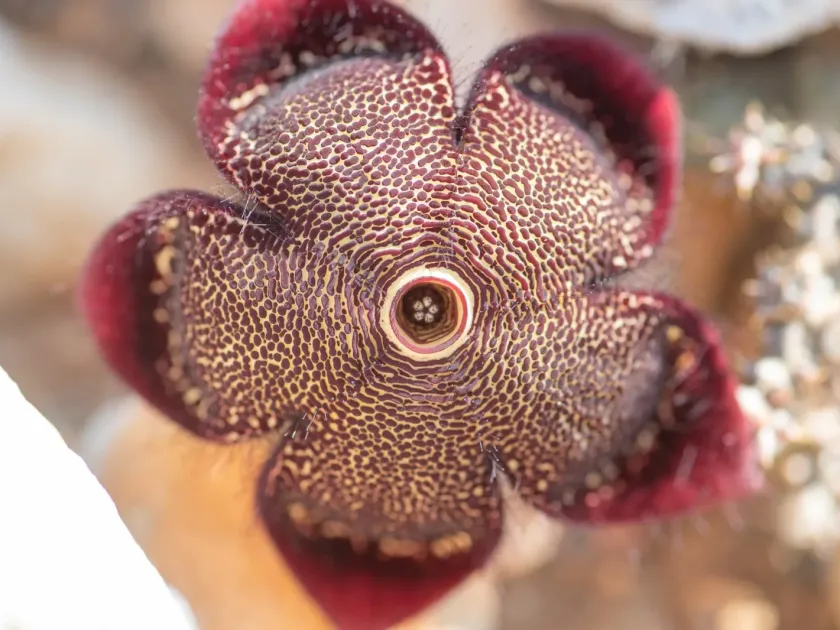
The plant is a leafless stem succulent with distinct segmented stems covered in small tubercles. It is highly valued by collectors for its large, striking flowers featuring an unusual leopard-like pattern, which can reach up to 13 centimeters in diameter.
Successful cultivation requires a substrate with excellent drainage, typically composed of a mix of sand, perlite, and loam. Edithcolea is extremely sensitive to excess moisture in the root system, making the choice of a highly porous growing medium critical.
The plant thrives under bright, diffused light but does not tolerate direct midday sun, which can scorch the succulent stems. The optimal temperature range during the active growing season is between 22 and 28 degrees Celsius.
During winter, the culture requires a distinct dormant period at cooler temperatures (around 12–15 degrees) with minimal watering. During this phase, the plant significantly slows its growth and requires protection from waterlogging to prevent root rot.
Main diseases and pests
The primary threat to this plant comes from fungal infections caused by stagnant moisture in the soil or trapped in the stem crevices. Affected areas soften and darken rapidly, which often leads to the complete loss of the specimen.
Regarding pests, mealybugs and spider mites pose the greatest risk to Edithcolea. These insects thrive in dry and warm environments, feeding on the plant's sap and significantly weakening its overall immune system.
To prevent pest infestation, regular inspection of the stems and maintaining optimal air circulation in the growing area are recommended. If colonies are detected, specialized systemic insecticides or acaricides should be used promptly.
Root rots are generally a result of errors in the watering regimen, particularly during cooler months. To minimize risks, the use of unglazed ceramic pots is advised, as they facilitate the evaporation of excess moisture.
To enhance the plant's overall resistance to diseases, it is essential to ensure regular ventilation of the growing environment. Under conditions of low light or poor air circulation, Edithcolea becomes highly susceptible to various pathogens.