
Cascabela thevetia
Cascabela thevetia
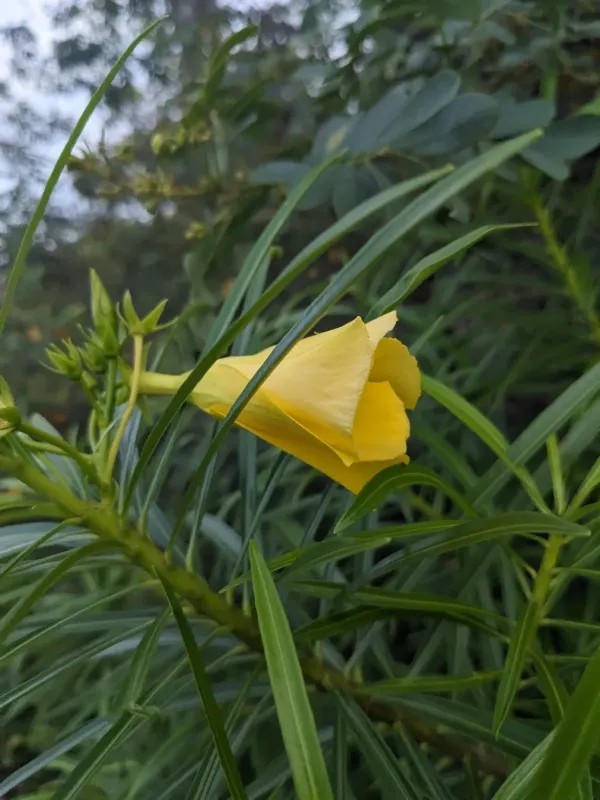
Description
Growing requirements
Cascabela thevetia, commonly known as yellow oleander, is a perennial shrub belonging to the Apocynaceae family. It is native to the tropical regions of the Americas and is widely recognized for its narrow, leathery leaves and trumpet-shaped yellow flowers that bloom throughout the warm season.
This plant thrives in tropical and subtropical climates where temperatures remain consistently high. It cannot tolerate frost or prolonged cold periods, which makes it suitable for container gardening in temperate zones, allowing for protection during the winter months.
The cultivation requirements focus on providing full sun exposure to ensure optimal flowering. While it is somewhat drought-tolerant once established, consistent moisture during the active growth period significantly improves both foliage density and the number of blossoms produced.
Soil quality must be prioritised by selecting a well-draining potting mix or preparing a soil bed with high organic content. The plant's root system is sensitive to waterlogging, so ensuring efficient drainage is the most critical factor in preventing physiological stress.
In terms of agricultural management, regular pruning is necessary to maintain the desired shape and density of the shrub. It is often used as an ornamental hedge in frost-free regions, though its extreme toxicity requires careful placement away from areas frequented by children or pets.
Main diseases and pests
Due to the presence of cardiac glycosides, Cascabela thevetia is naturally resistant to many common garden pests. The toxic nature of its sap serves as a strong deterrent against herbivores and many generalist insects that might otherwise damage the plant.
However, glasshouse or indoor environments can occasionally lead to infestations of spider mites or scale insects. These pests feed on the plant's sap, potentially causing leaf yellowing and stunted growth if not addressed with appropriate systemic insecticides.
Root rot is the most common health issue, usually stemming from overwatering or inadequate soil aeration. This condition typically manifests as wilting, despite moist soil, and often requires replacing the growing medium or pruning back affected roots.
Sooty mold may develop if scale insects are present, as they excrete honeydew that encourages fungal growth on the leaves. Cleaning the foliage and eliminating the source of the infestation is the standard procedure for managing this problem.
Safety is the primary consideration when managing this crop, as all parts of the plant are highly poisonous if ingested. It is essential to wear gloves during pruning and cleaning to prevent skin irritation caused by the white latex sap.