
Stemless carline thistle
Carlina acaulis L.
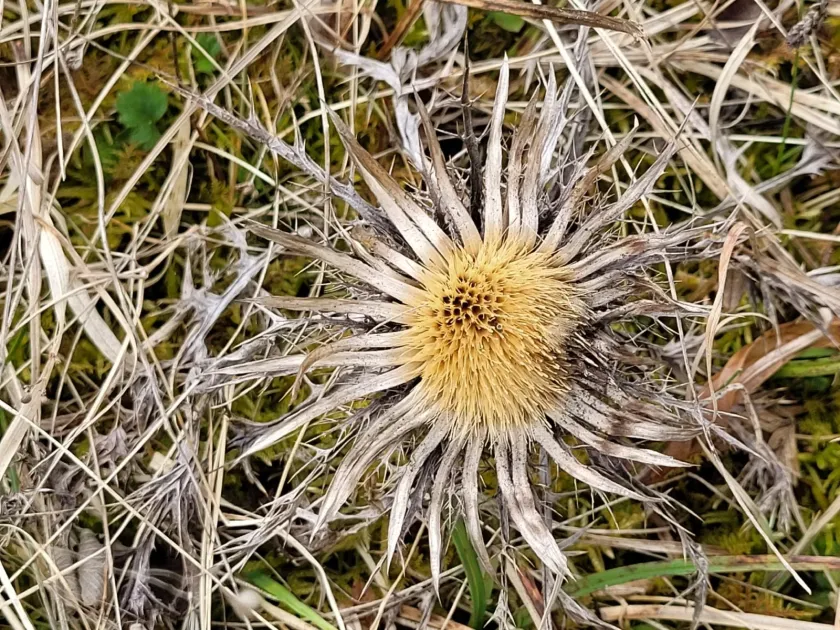
Description
Sowing dates
The cultivation of Carlina acaulis begins with seed sowing, which often requires a cold stratification period to break dormancy and ensure optimal germination rates. Seeds should be sown in early spring once the soil temperature is sufficiently stable.
Seeds are typically placed at a shallow depth of approximately 1 centimeter in well-prepared, loose soil. Maintaining proper spacing is essential because the plant develops a sprawling basal rosette that requires room to expand during its initial growth stages.
In the first year, the plant focuses on establishing a robust taproot and the characteristic rosette of leaves. Because it grows slowly initially, weed control is crucial during the early stages of establishment to prevent competition.
Greenhouse propagation and transplanting are viable options for commercial growers, allowing for better management of young plants. Transplanting should be done carefully to avoid damaging the developing taproot system, which is delicate at the seedling stage.
Selection of high-quality, viable seeds is vital for success. Ensuring the sowing bed is free of deep-rooted perennial weeds simplifies maintenance throughout the growing cycle and leads to more uniform plant development.
Growing requirements
Stemless carline thistle belongs to the Asteraceae family and thrives in open, sun-drenched locations. It is a heliophilic species that requires full sunlight to develop properly and reach maturity.
The plant prefers well-drained, porous soils with a neutral to slightly alkaline pH. It is particularly well-suited to limestone-rich soils, reflecting its natural habitat in dry meadows and rocky alpine slopes.
Waterlogging is the primary enemy of this species; therefore, high-quality drainage is essential. Carlina acaulis is highly drought-tolerant and performs well in conditions that would be too arid for many other agricultural crops.
The species exhibits exceptional winter hardiness, as it is naturally adapted to mountain environments. It can survive significant temperature fluctuations and freezing conditions, making it suitable for cultivation in varied northern climates.
Fertilization should be managed carefully, with a preference for potassium and phosphorus to support root development. Excessive nitrogen should be avoided as it can induce succulent growth, making the plant more susceptible to diseases and reducing its medicinal potency.
Yield
The primary economic focus for Carlina acaulis is the harvesting of its roots for medicinal use. Yield is heavily dependent on plant age, with the second or third year being the optimal time for harvesting high-quality biomass.
A well-maintained plot can produce significant quantities of roots, provided the soil depth allows for the full development of the taproot. The root contains valuable substances such as inulin and essential oils which accumulate over time.
Plant density management is key to maximizing yield per hectare. By optimizing space, growers can ensure that every individual plant develops a thick, high-quality root, which increases the total weight and concentration of active compounds.
Besides the roots, the decorative inflorescences have value in the dried flower industry. They are highly sought after for wreaths and arrangements due to their durability, providing a secondary income stream for producers.
Medicinal preparations derived from the root are valued for their antimicrobial and diuretic properties. High-quality production ensures a stable position in the herbal supplement market, where consistent potency is highly rewarded.
Main diseases and pests
Fungal pathogens, particularly those causing root rot, are the most significant threats to Carlina acaulis plantations. These diseases are most prevalent in damp, poorly drained soil conditions or during periods of excessive rainfall.
Preventative measures center on soil management and site selection. Ensuring proper air circulation and strictly avoiding over-irrigation are the most effective ways to minimize the risk of pathogenic outbreaks in the field.
Pests such as aphids or leaf-chewing caterpillars may occasionally attack the plant. Regular monitoring of the foliage and inflorescences is necessary to catch infestations before they cause significant damage to the plant's health.
Integrated pest management strategies should prioritize biological controls to protect the integrity of the herbal raw material. Pesticide use must be minimized or avoided entirely to meet organic or high-quality pharmaceutical standards.
Proper plant spacing and healthy, well-drained soil are the best defenses against most threats. A plant growing in its ideal environment will naturally possess a stronger immune system and better resilience to stress.
Harvesting
Harvesting the roots of the stemless carline thistle is typically performed in late autumn after the growing season has concluded. This ensures the root is at its peak in terms of stored nutrients and medicinal components.
Using mechanical diggers or manual hand-tools, growers must carefully extract the roots to avoid snapping the taproot. Even minor physical damage can decrease the market value of the harvested raw material.
Immediately after harvest, the roots must be thoroughly cleaned of soil and debris, using running water. Any diseased or undersized roots should be culled to ensure the final product meets commercial quality standards.
Drying is a critical phase, requiring a controlled environment at temperatures not exceeding 45 degrees Celsius. Good ventilation is essential to maintain the aromatic profile and chemical potency of the medicinal extracts.
Once dried, the product should be stored in breathable, moisture-resistant packaging in a cool, dark location. Regular checks for moisture are necessary to prevent degradation and ensure a long shelf life for the stored herbs.