
Arivela viscosa
Arivela viscosa (L.) Raf.
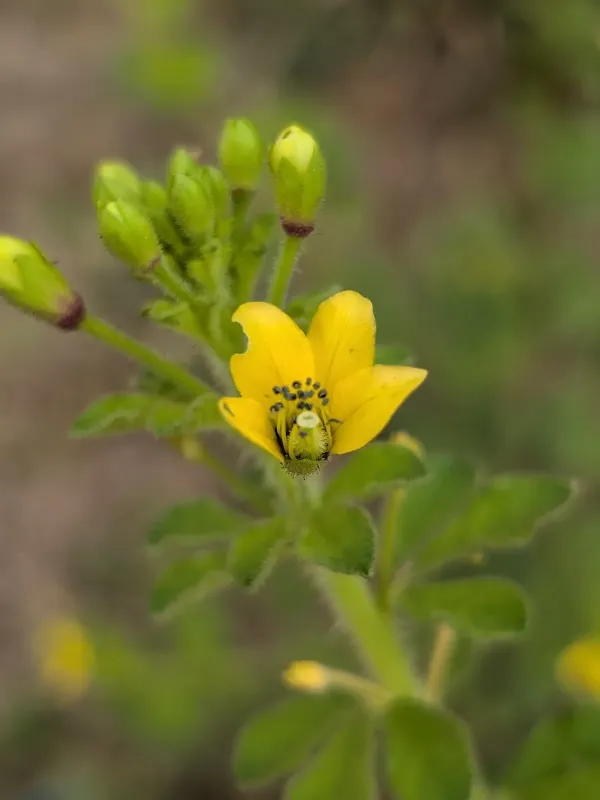
Description
Sowing dates
Arivela viscosa is a heat-loving species that requires warm soil conditions for successful germination. Sowing typically takes place in late spring when soil temperatures at planting depth reach at least 18–20 degrees Celsius, ensuring rapid and uniform emergence of seedlings.
Seeds are sown in rows spaced 30 to 45 centimeters apart to provide sufficient space for branching and root development. The planting depth should be shallow, around 1–2 centimeters, as the small seeds need proper contact with moist soil to initiate the germination process effectively.
Pre-treatment of seeds, such as gentle scarification or soaking in water, can significantly improve germination rates. Irrigation immediately following the sowing process is essential to maintain soil moisture, which is critical for the early establishment of the crop in dry conditions.
In regions with irrigation capabilities, multiple planting cycles may be feasible. However, one must always account for the total duration of the warm growing season, as the crop requires sufficient time to reach full maturity and produce viable seeds before autumn temperature drops.
The optimal plant density for field production ranges between 150,000 and 200,000 plants per hectare. This density balance is crucial to maximize yields while minimizing resource competition between individual plants within the rows.
Growing requirements
Arivela viscosa belongs to the Cleomaceae family and is native to tropical and subtropical environments characterized by distinct dry seasons. The plant features a robust taproot system, which provides it with excellent drought tolerance in arid climates.
The crop thrives in well-drained, loose sandy or sandy loam soils. It is sensitive to waterlogging, as heavy clay soils that retain excess moisture can promote root rot and hinder overall development, making site selection a critical factor for success.
Full sun exposure is a requirement for optimal biomass production and seed set. Arivela viscosa is highly photophilous, and even partial shade can lead to leggy, weak plants and a significant reduction in the concentration of secondary metabolites in the foliage.
The ideal temperature range for vegetative growth is between 25 and 35 degrees Celsius. The plant is well-adapted to high heat and low atmospheric humidity, making it a viable candidate for agricultural diversification in warm, challenging environments.
Initial weed management is vital as the crop grows slowly during the seedling phase. Once the plant forms a substantial basal rosette of leaves, it effectively outcompetes common weeds, reducing the need for intensive mechanical or chemical intervention.
Yield
The economic yield of Arivela viscosa is primarily determined by seed production, which serves as a source of fatty oils and proteins. Under favorable conditions with adequate moisture and nutrients, seed yields can reach 0.8 to 1.2 tonnes per hectare.
Beyond oilseeds, the plant is harvested for its biomass, which contains flavonoids and essential oils of interest to the pharmaceutical and cosmetic industries. This dual-purpose utility makes the crop highly attractive for sustainable agricultural systems.
Accumulation of oil and active compounds in the seeds occurs during the final maturation phase. Harvesting at the precise moment when pods turn brown and start to dry is essential to prevent seed shattering and maximize the final recovery of high-quality products.
Integration of balanced mineral fertilization, particularly phosphorus and potassium, can enhance both the yield and the oil quality of the seeds. Modern agronomic practices emphasize efficiency in harvesting to ensure high-value outputs for industrial processing.
The crop also contributes to soil health by leaving behind substantial biomass that can be incorporated into the soil profile. This improves organic matter levels and soil structure, benefiting subsequent crops in a standard agricultural rotation.
Main diseases and pests
Aphids are the most common pests affecting Arivela viscosa, particularly targeting terminal buds and tender new leaves during the rapid growth phase. Heavy infestations can distort plant morphology and weaken the overall vitality of the crop.
Caterpillars of certain lepidopteran species may also cause defoliation. In overly humid or poorly ventilated conditions, the crop is susceptible to powdery mildew and various leaf spot diseases, which can compromise the quality of the raw material.
Preventive strategies include a rigorous crop rotation cycle, avoiding planting Arivela viscosa after other related species to break the life cycles of specific pathogens. Clean field management and proper plant spacing are effective cultural controls for these diseases.
Biological pest control agents, such as predatory mites or bio-insecticides, are highly recommended for crops destined for medicinal use. These methods ensure that the final product meets safety standards and is free from harmful chemical residues.
Regular monitoring of the fields during the flowering stage is critical, as this is when plants are most sensitive to environmental and biological stressors. Early detection allows for targeted and efficient management of potential threats.
Harvesting
Harvesting Arivela viscosa must be performed under dry conditions to ensure the seeds are not damaged by moisture. The timing is ideal when the majority of pods have turned dark brown and become brittle, signaling that the seeds have reached physiological maturity.
Because pod ripening occurs non-uniformly along the stem, mechanical harvesting often benefits from the use of desiccants to create a uniform maturation window. This approach significantly reduces harvest losses and improves the efficiency of seed collection.
Post-harvest processing involves immediate cleaning to remove plant debris and dust, followed by drying in well-ventilated areas. Controlled drying is essential to prevent moisture buildup, which could lead to mold growth and reduce the quality of stored seeds.
If the target is medicinal biomass, harvesting should take place at the start of the flowering period. At this stage, the concentration of active medicinal compounds is highest, ensuring the highest quality of raw material for pharmaceutical processing.
Proper storage in sealed, moisture-proof containers is necessary to maintain the shelf life and quality of the seeds or dried herb. Protecting the product from pests and high temperatures ensures it remains market-ready for as long as possible.