
Aeschynanthus wallichii
Aeschynanthus wallichii
Description
Growing requirements
Aeschynanthus wallichii is a captivating member of the Gesneriaceae family, recognized for its epiphytic growth habit. Native to the humid tropical forests of South-East Asia, this plant naturally thrives in the canopy of trees, utilizing organic debris for nutrients.
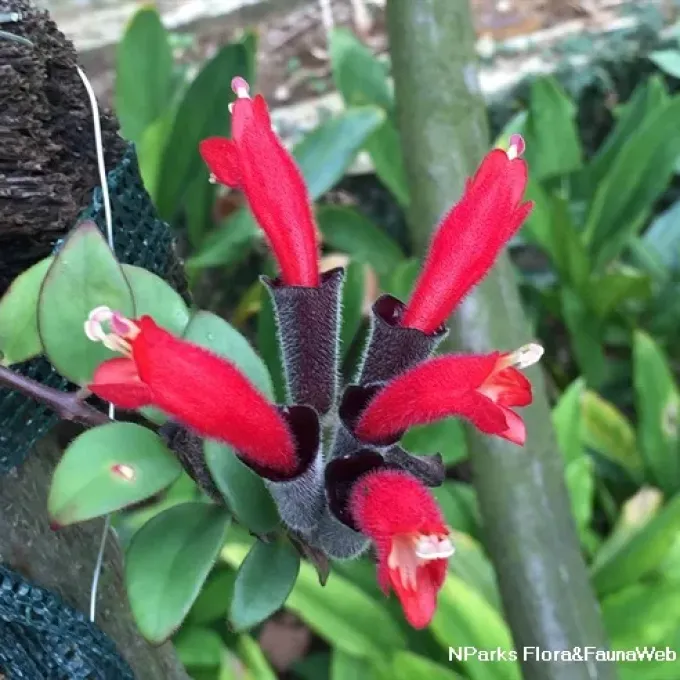
Botanically, the plant is characterized by its succulent, lanceolate foliage and striking tubular flowers, which typically display deep red or orange hues. Its growth form is trailing or pendant, making it an excellent candidate for hanging baskets in greenhouses.
To cultivate Aeschynanthus successfully, one must replicate its native tropical climate. High humidity levels are essential, ideally maintained between 60% and 80%, to ensure the plant does not lose its lush appearance or fail to bloom effectively.
The soil requirements are strict due to its epiphytic nature. A coarse, well-draining potting mix is necessary, consisting of orchid bark, perlite, and sphagnum moss. This composition ensures that the root system receives adequate aeration and avoids waterlogging.
Lighting should be bright but filtered. In agricultural and horticultural settings, light management is crucial; artificial LED lighting may be used to supplement natural light during shorter days, ensuring the plant receives consistent energy for floral development.
Main diseases and pests
Spider mites are the most persistent pest for Aeschynanthus wallichii, especially in environments where air circulation is poor and humidity is low. These tiny pests weave webs and drain the cell sap, causing leaves to yellow and eventually drop.
Mealybugs can also infest the plant, hiding in the leaf axils and stems. Regular monitoring and the application of horticultural oils or systemic insecticides are standard procedures for managing these infestations in commercial plant production.
Root rot is a major physiological threat caused by overwatering or poor drainage. Once the roots are compromised by fungi, the plant quickly loses its ability to absorb water, leading to wilting and death, even if the soil appears moist.
To mitigate disease risks, strictly follow a dry-down schedule between waterings. Ensuring the medium is not permanently soaked allows the roots to breathe, which is the most effective biological defense against fungal pathogens in epiphytic species.
Proper sanitation in the growing area is vital. Removing dead or decaying leaves prevents the buildup of pathogens, ensuring that the plant remains healthy throughout its vegetative and flowering cycles.