
Aeschynanthus superbus
Aeschynanthus superbus
Description
Growing requirements
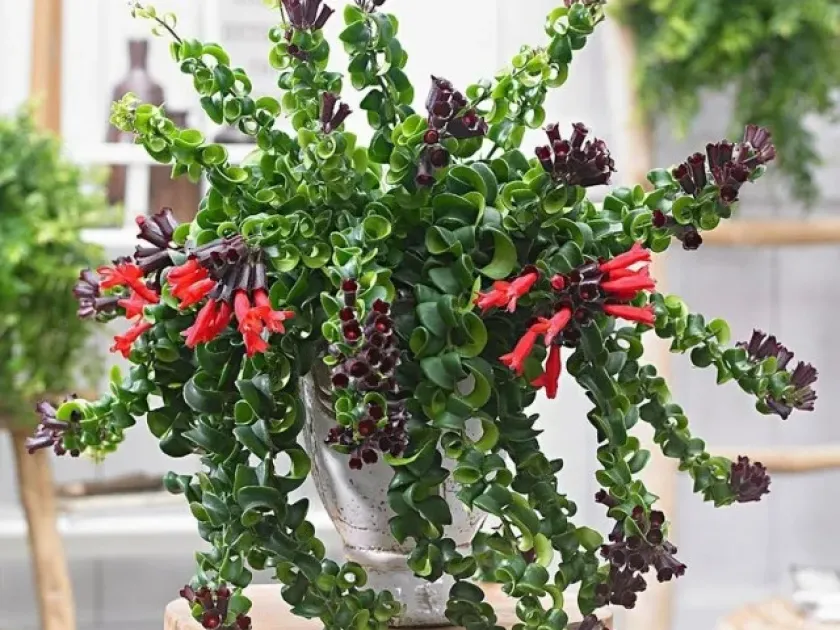
Aeschynanthus superbus is a distinguished member of the Gesneriaceae family. This species originates from the tropical regions of Southeast Asia, where it functions as an epiphyte, naturally growing on the trunks and branches of trees in humid forest environments.
To cultivate this plant successfully, one must replicate its native tropical conditions. It requires consistent temperatures between 22 and 26 degrees Celsius and high ambient humidity. Cold drafts and sudden temperature fluctuations must be strictly avoided to prevent foliage drop.
The substrate must be highly aerated and mimic the forest floor or tree bark environment. A mixture consisting of pine bark, peat moss, perlite, and charcoal is ideal. This composition ensures that excess water drains away quickly while maintaining necessary moisture levels.
Light requirements are significant; the plant thrives in bright, filtered light. While it loves sunshine, direct exposure during peak hours can damage the leaves. Eastern or western windows are generally the most suitable locations for healthy growth.
Irrigation should be performed with lukewarm, soft water. The plant requires a steady moisture level in the substrate, but it should never be waterlogged. During the dormant period, the watering frequency should be reduced to accommodate the plant's slower metabolism.
Main diseases and pests
Spider mites are the most common pests, particularly when indoor air humidity is too low. Regularly checking the undersides of leaves and maintaining a humid environment can prevent these pests from establishing colonies on the plant.
Root rot is a critical threat often caused by overwatering or poor drainage. If the leaves become soft and discolored, it is a sign that the root system is failing due to excessive water retention in the pot.
Mealybugs can often be found in the leaf axils, where they feed on sap. Early detection and manual removal using cotton swabs dipped in alcohol, or the application of systemic insecticides, are necessary to control these infestations.
Fungal infections can manifest as black spots on the foliage, usually caused by stagnant air and moisture trapped on the leaf surface. Improving ventilation and ensuring leaves are dry by evening are effective preventative strategies.
Nutrient deficiencies, specifically regarding essential minerals, can result in stunted growth and chlorosis. Balanced, low-salt liquid fertilizers applied during the active growing season will help maintain the plant's structural integrity and aesthetic appeal.