
Aeschynanthus pulcher
Aeschynanthus pulcher
Description
Growing requirements
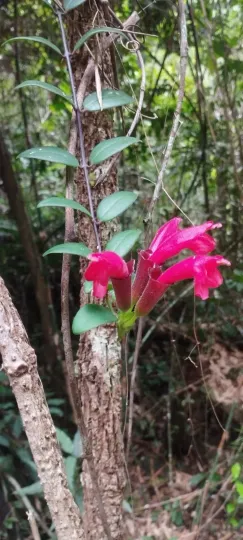
Aeschynanthus pulcher is a stunning epiphytic species within the Gesneriaceae family. Originating from the tropical rainforests of Southeast Asia, it naturally thrives in high-humidity environments, attached to tree branches. In agricultural and horticultural contexts, it is primarily cultivated as an indoor ornamental plant valued for its trailing stems and vibrant flowers.
Successful cultivation requires bright, indirect light to ensure healthy foliage growth and consistent blooming. Direct sunlight should be avoided as it can cause leaf scorch and damage the plant's succulent tissues. Providing a consistent temperature range of 22–25 degrees Celsius is ideal for sustaining active growth phases throughout the season.
The growing medium must be highly porous and well-draining, mimicking the natural conditions of a forest canopy. A suitable potting mix typically includes pine bark, peat moss, perlite, and charcoal. This structure prevents root suffocation and promotes the development of a healthy root system, which is essential for this species.
Watering requirements focus on maintaining constant, moderate moisture without allowing the roots to sit in waterlogged soil. Soft, tepid water is recommended to avoid the buildup of minerals in the substrate. During the cooler winter months, the plant benefits from a slight reduction in irrigation to simulate a rest period, which is necessary for bud initiation.
Agronomic management includes regular pruning to encourage branching and maintain a compact, attractive appearance. Propagation is typically achieved through stem cuttings placed in a moist, warm environment. Maintaining high ambient humidity through misting or humidifiers is vital for preventing leaf tip browning and ensuring optimal physiological activity.
Main diseases and pests
Common botanical threats include fungal infections such as botrytis and root rot, which are primarily caused by overwatering or poor ventilation. These conditions lead to decaying stems and yellowing foliage, which significantly reduce the market value and health of the plant. Maintaining sterile conditions and avoiding water on foliage helps minimize these risks.
Pest management is focused on controlling aphids, spider mites, and scale insects. These pests often proliferate when the plant is kept in dry, stagnant air. Integrated pest management, including regular inspection and the use of insecticidal soaps or horticultural oils, is highly effective in maintaining the health and longevity of the crop.