
Aeschynanthus marmoratus
Aeschynanthus marmoratus
Description
Growing requirements
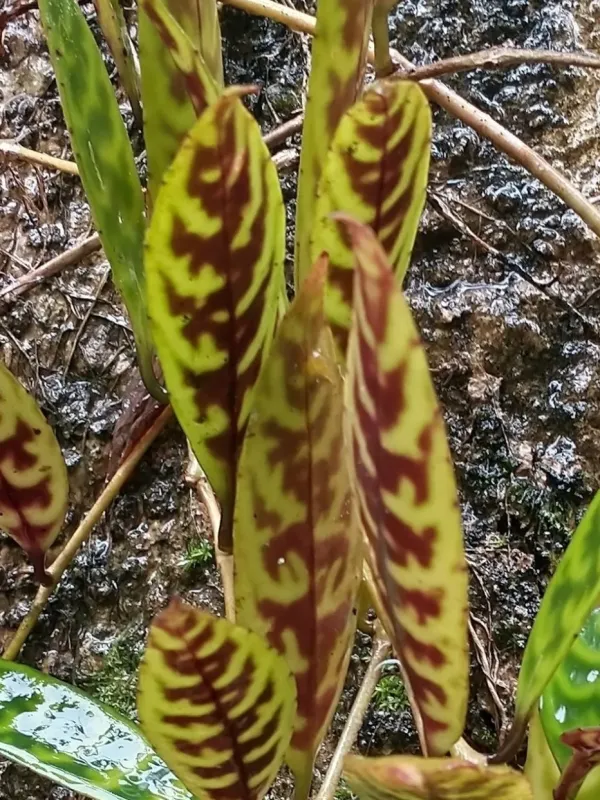
Aeschynanthus marmoratus, commonly known as the marble lipstick plant, is a distinct species within the Gesneriaceae family. Native to the tropical rainforests of Southeast Asia, it functions as an epiphyte, growing naturally on tree trunks and in rock crevices where it thrives on organic debris.
The plant is highly regarded for its unique botanical features, specifically the variegated, marbled patterns found on the underside of its thick, succulent-like leaves. These leaves provide a stunning aesthetic contrast, making it a popular choice for hanging baskets in indoor horticulture.
Cultural requirements involve providing bright, indirect light to maintain the intensity of the foliage variegation. Direct sunlight should be avoided, as it can cause leaf scorch, while extremely low light levels often lead to sparse, weak growth and the loss of the plant's natural form.
Soil composition must mimic the airy, well-draining environment of an epiphytic habitat. A mixture composed of orchid bark, perlite, and high-quality peat moss or coco coir is recommended to ensure adequate drainage and prevent the roots from becoming waterlogged.
Maintaining high humidity is essential for the health of this species. Since it originates from tropical environments, it benefits from daily misting or the use of a room humidifier, especially during winter months when indoor heating systems tend to dry out the air significantly.
Main diseases and pests
The primary threats to this plant are soil-borne pathogens related to overwatering. Root rot is a common issue when the plant is kept in heavy soil or stagnant water, which compromises the integrity of the root system and prevents nutrient uptake.
Insect pests, including mealybugs and spider mites, are frequent challenges. These thrive in warm, dry environments and can quickly infest the foliage. Monitoring the undersides of leaves and applying appropriate horticultural soaps or neem oil is the standard method for management.