
Aeschynanthus
Aeschynanthus hybrids
Description
Growing requirements
Aeschynanthus hybrids belong to the Gesneriaceae family and are popular as epiphytic trailing plants. Originating from the tropical regions of Southeast Asia, they grow naturally on tree branches, which dictates their specific requirements for a loose, well-draining substrate in cultivation.
The plant requires bright, indirect light to maintain its foliage density and encourage blooming. Direct afternoon sun should be avoided to prevent leaf scorch, while extremely low light conditions will inhibit flower production and cause the stems to become weak and sparse.
The growing medium should resemble an epiphytic mix. A combination of peat, orchid bark, perlite, and sphagnum moss provides the necessary aeration and moisture retention. Proper drainage is crucial to prevent the roots from sitting in stagnant water, which is a major risk for this species.
Temperature management is key to successful development, with an optimal range between 20 and 25 degrees Celsius. Aeschynanthus does not tolerate cold drafts or sudden temperature drops, which can lead to leaf drop and a significant decline in the health of the plant.
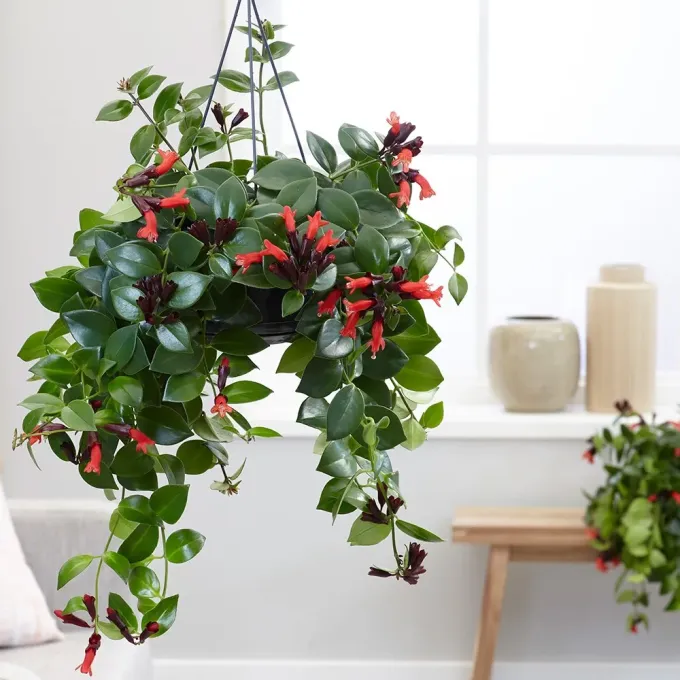
Aeschynanthus hybrids are extensively cultivated for their high ornamental value in hanging baskets. They are widely used in commercial interior design and greenhouse horticulture due to their attractive, waxy leaves and unique, vibrant tubular flowers that emerge from dark calyxes.
Main diseases and pests
The most common pests affecting these plants are spider mites and mealybugs, especially in low-humidity environments. Regular misting and proper air circulation help prevent infestations, but if pests appear, insecticidal soaps or systemic treatments should be applied promptly.
Fungal diseases are usually associated with overwatering or poor ventilation. Root rot is a significant danger, often resulting in yellowing foliage and stem collapse. To manage these threats, ensure the soil is allowed to dry slightly between waterings and maintain good hygiene in the plant area.