
Aeschynanthus fulgens
Aeschynanthus fulgens
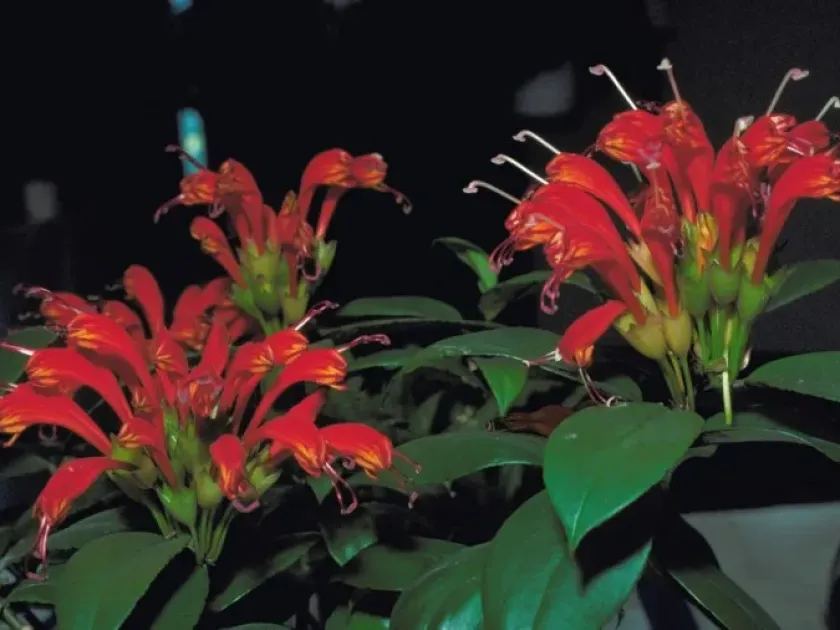
Description
Growing requirements
Aeschynanthus fulgens is an epiphytic species within the Gesneriaceae family, native to the humid tropical environments of Southeast Asia.
Cultivation requires a stable thermal environment, maintaining temperatures between 20°C and 25°C throughout the active growing season.
The plant thrives under bright, filtered light conditions. Excessive direct sunlight causes severe tissue damage to the succulent-like foliage, while insufficient light hinders flowering.
Humidity management is vital for this species, requiring levels above 60%. Frequent misting or usage of pebble trays is recommended in indoor environments.
The optimal growth medium is a well-draining epiphytic mix, typically composed of peat moss, pine bark, perlite, and charcoal to prevent waterlogging.
Main diseases and pests
Spider mites are a primary concern, particularly during periods of low humidity; they cause discoloration and leaf shedding.
Root rot is the most significant pathological threat, primarily induced by improper substrate aeration or excessive watering practices.
Mealybugs can infest the leaf axils, leaving white, cottony deposits and weakening the plant structure if left untreated.
Botrytis cinerea may affect the flowers and foliage under conditions of high humidity combined with poor air circulation.
Integrated pest management strategies involve maintaining optimal air movement and utilizing biological or chemical control agents when infestations are detected.