
Aeschynanthus ellipticus
Aeschynanthus ellipticus
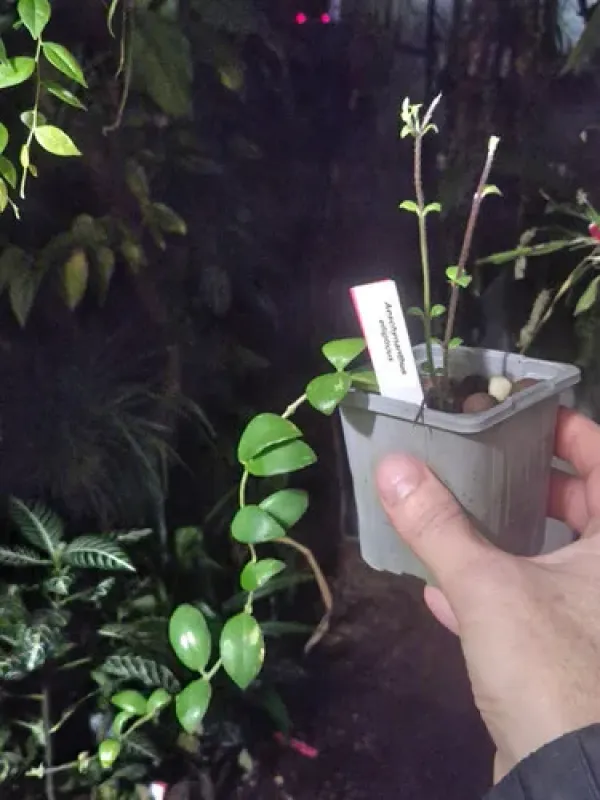
Description
Growing requirements
Aeschynanthus ellipticus is an epiphytic plant belonging to the Gesneriaceae family, naturally occurring in the tropical rainforests of Southeast Asia.
To ensure successful cultivation, this species requires bright, indirect light; direct sunlight exposure often results in leaf chlorosis or tissue burn.
The plant thrives in warm environments with temperatures ranging from 22°C to 26°C, as it is highly sensitive to sudden thermal fluctuations and cold drafts.
A highly porous and well-draining substrate is essential for healthy root development, preventing the accumulation of excess moisture in the root zone.
Maintaining high relative humidity levels, ideally above 70%, is critical for this species, as it mimics the humid conditions of its native habitat.
Main diseases and pests
Spider mites represent a significant threat to Aeschynanthus ellipticus, particularly in environments with low humidity where the pest can multiply rapidly.
Mealybugs are another common pest that tends to colonize the leaf axils and stems, extracting plant sap and severely weakening the specimen.
Improper watering practices frequently lead to root and crown rot, which are often irreversible if the decay has progressed to the stem base.
Regular sanitation, including the removal of dead leaves and deadheaded flowers, is necessary to prevent the onset of fungal diseases in the canopy.
Effective pest management requires the integrated use of horticultural oils or systemic insecticides, combined with consistent monitoring of plant vigor.