
Aeonium leucoblepharum
Aeonium leucoblepharum
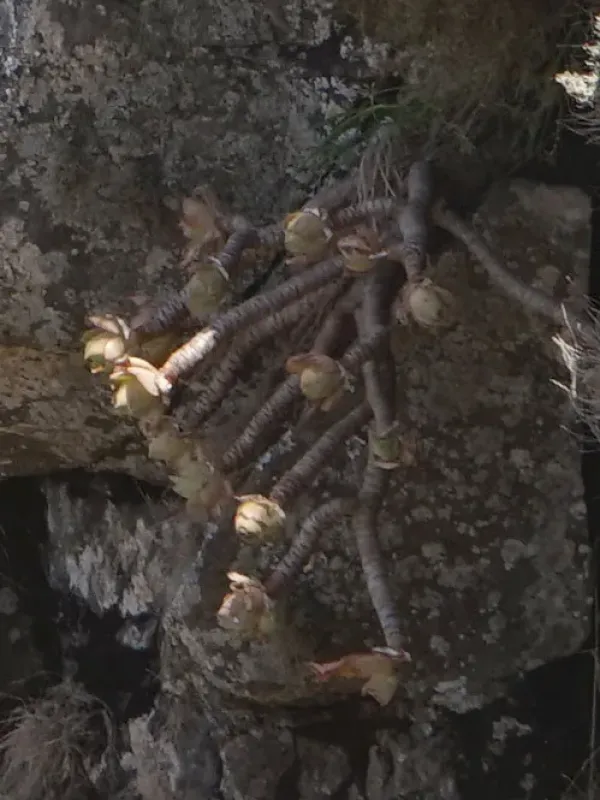
Description
Growing requirements
Aeonium leucoblepharum is a succulent species belonging to the Crassulaceae family. It is native to the mountainous regions of Ethiopia, Yemen, and the Arabian Peninsula, where it thrives in rocky terrain and well-draining soils adapted to arid conditions.
The plant is defined by its attractive rosettes of fleshy leaves, which are distinguished by fine white cilia (hairs) along their margins. These physical characteristics assist the plant in moisture retention and protection against high-altitude ultraviolet radiation.
Cultivation requires plenty of bright, indirect sunlight to maintain the compact growth habit of the rosettes. Insufficient light often causes the stems to stretch (etiolation), which can weaken the overall structural integrity of the plant.
Regarding soil requirements, a specialized succulent or cactus mix is essential. The medium must be porous and include components like coarse sand, pumice, or perlite to facilitate rapid water drainage and prevent the roots from remaining in a saturated environment.
The watering schedule should follow the soak-and-dry method. During the active growing season, water thoroughly only when the soil medium has completely dried out. In the dormant period, significantly reduce irrigation to mimic the dry season of its natural habitat.
Main diseases and pests
The primary concern for Aeonium leucoblepharum is root rot, which is almost exclusively caused by overwatering or poor soil drainage. Once rot sets in, the stem becomes mushy and the plant may lose its structural stability very quickly.
Mealybugs are the most common pests, often hiding in the crevices between leaves. They appear as small, white, cottony masses and feed on the sap of the plant. If left untreated, they can cause significant tissue damage and stunted growth.
Spider mites can also be a problem in environments with low humidity. They typically manifest as fine webbing and tiny yellow spots on the leaves. Increasing air circulation and maintaining proper humidity levels can help deter these pests from establishing colonies.
Chemical control involving systemic insecticides or horticultural oils may be necessary for severe infestations. Always ensure that the treatment is applied during cooler parts of the day to prevent chemical burn on the succulent foliage.
Good sanitation practices are critical for disease management. Removing fallen dead leaves from the surface of the soil eliminates potential hiding spots for pests and reduces the risk of fungal spores colonizing the plant tissue during humid weather.