
Aeonium haworthii
Aeonium haworthii
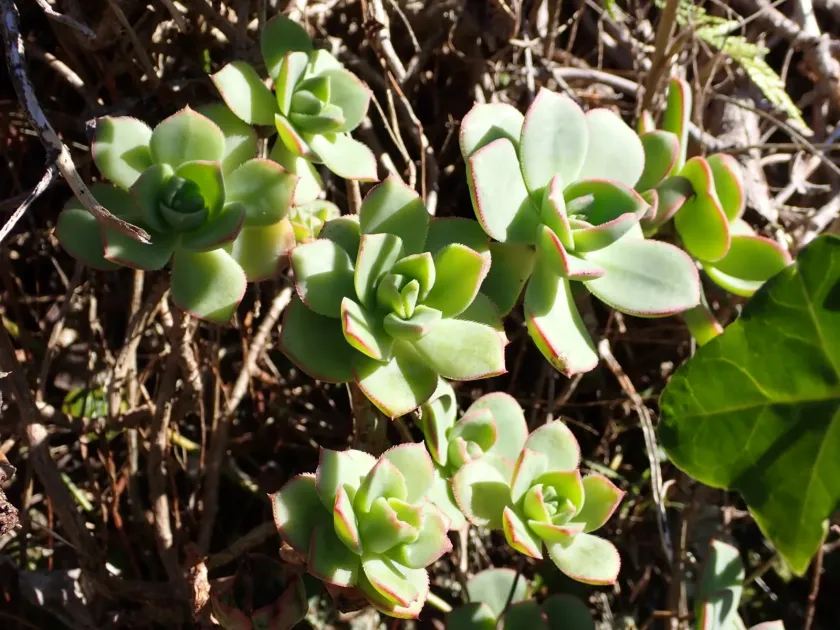
Description
Growing requirements
Aeonium haworthii is a perennial succulent species belonging to the Crassulaceae family. Native to the Canary Islands, it is highly adapted to rocky, well-drained environments.
The plant features woody, branching stems topped with dense, rosettes of fleshy leaves. The leaf margins are often tinged with a reddish hue, which intensifies under direct sunlight.
In terms of climate requirements, this plant prefers mild temperatures and requires high intensity of light to maintain its compact growth form and vibrant coloration.
Agronomic management involves using a very porous and gritty potting medium. Irrigation should be applied only when the soil is completely dry, especially during the dormant winter phase.
The crop is primarily utilized for decorative purposes in xeriscaping, rock gardens, and indoor container gardening due to its architectural appearance and ease of propagation.
Main diseases and pests
The primary agronomic threat to Aeonium haworthii is root rot, which is almost exclusively caused by overwatering or poorly draining soil conditions in the growing environment.
Mealybugs are the most common pests, often clustering in the tight spaces between leaves within the rosette, where they feed on plant sap and secrete honeydew.
Spider mites can also be problematic, especially in low-humidity environments, leading to yellowing of leaves and a general decline in the plant's aesthetic vitality.
To maintain plant health, it is essential to monitor for signs of pest infestation and ensure proper ventilation to prevent fungal pathogens from settling on the succulent foliage.
Integrated pest management strategies should emphasize preventive care, such as clean sanitation practices and monitoring the moisture levels of the growing substrate.