
Aeonium balsamiferum
Aeonium balsamiferum
Description
Growing requirements
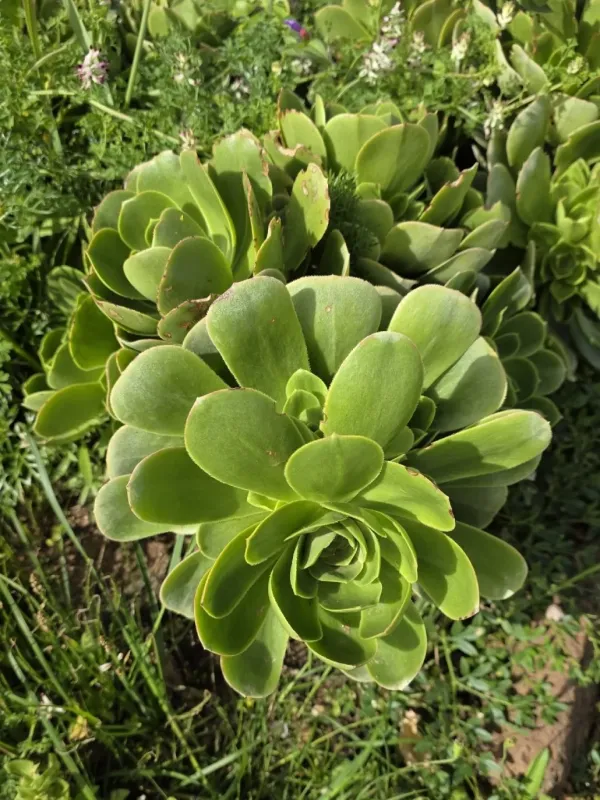
Aeonium balsamiferum is a perennial succulent shrub belonging to the Crassulaceae family. Native to the Canary Islands, it is well-known for its unique aromatic resinous scent, which gives the species its specific name.
This species requires high light levels to maintain its characteristic compact rosette shape and coloration. In cultivation, it thrives best in locations receiving direct sunlight or very bright, filtered light throughout the day.
The substrate must be extremely well-draining, similar to natural volcanic soils. A mixture of succulent potting soil, perlite, and coarse sand provides the necessary aeration to prevent root suffocation and water stagnation.
Temperature requirements are moderate; the plant grows best during the spring and autumn months. During the winter, it should be kept in a cool, bright area with significantly reduced watering to encourage a natural dormancy period.
The plant is primarily used as an ornamental specimen in xeriscaping or container gardening. Its slow growth and architectural aesthetic make it a favored subject for succulent collectors and indoor plant enthusiasts alike.
Main diseases and pests
Root rot is the most critical threat to Aeonium balsamiferum, usually triggered by overwatering or soil that retains too much moisture. Once the roots are compromised, the plant often struggles to recover.
Mealybugs are common pests that infest the rosettes, feeding on the succulent sap and stunting growth. If left untreated, they can spread quickly to neighboring plants, requiring persistent chemical or physical intervention.
Aphids can also cluster on the tender new growth of the rosettes. Regular inspections and the use of insecticidal soaps are typically effective in controlling these infestations before they become a systemic problem.
Fungal leaf spot can occur if the plant is kept in high humidity with poor air circulation. Providing adequate airflow and keeping the foliage dry are essential cultural practices for preventing these opportunistic infections.
To maintain plant health, it is vital to avoid leaving organic debris within the rosette. Removing dead lower leaves helps prevent the accumulation of moisture and provides fewer hiding places for potential pests such as scale insects.