
Adromischus schuldtianus
Adromischus schuldtianus
Description
Growing requirements
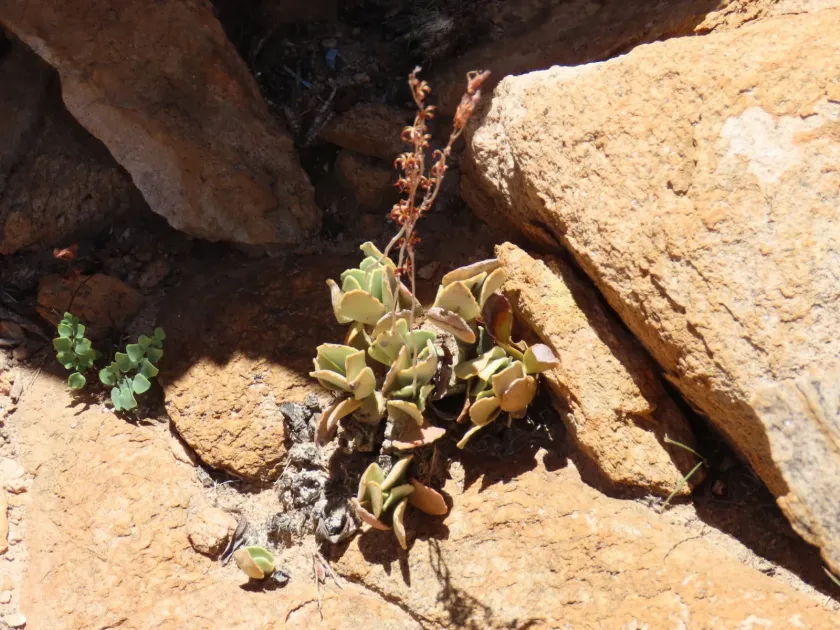
Adromischus schuldtianus is a perennial succulent belonging to the Crassulaceae family. It typically grows as a dwarf shrub with short, clustered stems that often remain low to the ground or slightly trailing in their natural habit.
The plant originates from the arid regions of Namibia and South Africa. Its habitat is characterized by rocky outcrops and high sun exposure, which has shaped its physiological ability to survive long periods of drought through water storage in its leaves.
Botanically, the plant features thick, fleshy leaves that are often elliptical and can display decorative mottling or a waxy cuticle. These adaptations prevent excessive transpiration and help the plant maintain its structural integrity during extreme heat.
Successful cultivation requires intense, bright light to maintain the plant's natural form and color. Without adequate lighting, the plant tends to become etiolated, losing its compact appearance and becoming prone to stem rot.
The growing medium must be highly porous and fast-draining. A professional-grade succulent mix including grit, pumice, and minimal organic matter is essential for maintaining the root health of this species in a containerized environment.
Main diseases and pests
Overwatering remains the primary cause of plant failure, leading to root rot and collar decay. It is crucial to allow the substrate to dry out completely between irrigation cycles to mimic the natural wetting and drying patterns of its native range.
Mealybugs are the most persistent pests affecting this species, often clustering in the tight spaces between leaves. Their presence can severely weaken the plant and lead to the development of sooty mold if left untreated.
Fungal infections, particularly those triggered by high humidity and poor airflow, can damage the leaves and stems. Proper ventilation is vital for preventing the spread of spores and maintaining a healthy microclimate for the succulent.
Root aphids may colonize the underground parts of the plant, often going unnoticed until the succulent shows signs of stunted growth or sudden wilting. Regular monitoring and repotting in fresh substrate are recommended for control.
In addition to these pests, extreme temperature fluctuations during the transition between seasons can stress the plant. Ensuring a gradual adjustment period helps in maintaining the hardiness of the specimen against common pathogens.